
Key Takeaways
- Loneliness in older adults often looks like irritability, physical complaints, or disengagement, not sadness.
- Withdrawal from activities a person once loved is one of the clearest early signals.
- Depression and loneliness overlap significantly; both are treatable, and neither is a normal part of aging.
- Families are often the first to notice the signs, but the signs are easy to misread as ‘just getting older.’
- A licensed clinician can evaluate whether what you’re seeing reflects treatable depression, grief, or chronic loneliness.
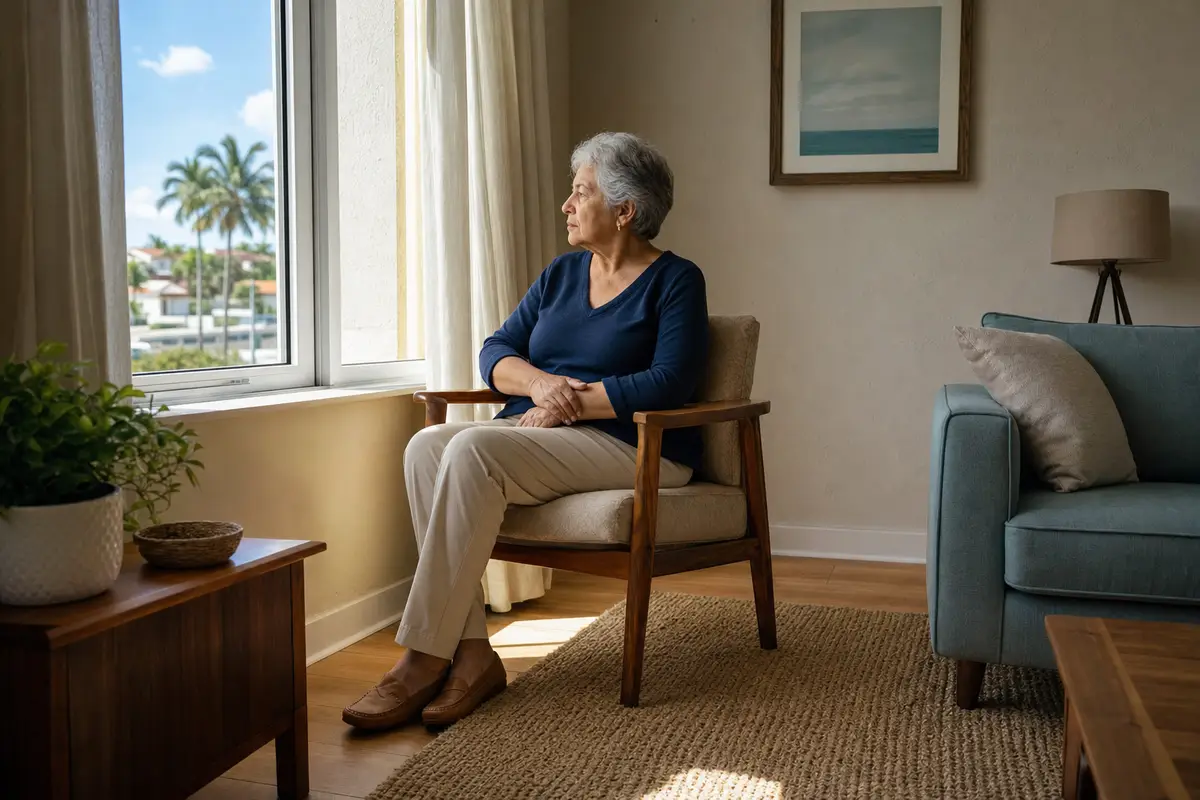
Consider a parent or grandparent who moves into an assisted living facility, and the family exhales. The practical worries, falls, medications, meals, are handled. What’s harder to see is what can happen to a person’s inner life once the structure of independent living falls away. Loneliness doesn’t always look like crying or saying ‘I miss people.’ It looks like skipping meals, snapping at staff, or staring at the television for six hours without really watching it. Knowing the specific signs of loneliness in elderly adults is one of the most useful things a family member can learn.
Why Loneliness in Older Adults Is Easy to Miss
Loneliness gets misread because its symptoms overlap with so many other things. Fatigue, appetite changes, and social withdrawal are attributed to ‘slowing down.’ A sharper temper gets chalked up to pain or medication. And because many older adults were raised to endure difficulty quietly, they won’t name what they’re feeling, even when asked directly.
This misreading has real consequences. Research consistently shows that depression and loneliness in assisted living residents go significantly under-recognized and undertreated. What families observe in visits often holds more diagnostic value than a quick clinical check-in, because families know the baseline, who this person was before.
If you’ve noticed something feels different about an older adult you love, trust that instinct. The nine patterns below are what loneliness and its close companions, depression, grief, disconnection, actually look like in daily life.
Clinical Insight
A four-state study of 2,078 residents published in the American Journal of Geriatric Psychiatry (2003) found that only 18% of residents who met the clinical threshold for depression were receiving antidepressant treatment at the time of evaluation. Over one-third of residents in the same study showed visible symptoms, anxious expression, rumination, and tearfulness, without ever receiving a diagnosis.
9 Signs of Loneliness in Elderly Adults
1. Pulling Back From Activities They Used to Enjoy
This is often the first sign families notice, and the one most likely to be dismissed as ‘they’re just tired.’ When an older adult stops going to the dining room for group meals, declines an activity they once looked forward to, or loses interest in a hobby they’ve maintained for decades, that shift is worth attention. Disengagement from pleasurable activities is a primary marker of both loneliness and depression.
Ask specific questions: ‘You used to love the Tuesday card game, what happened?’ Vague answers or a shrug often signal something deeper than scheduling preference.
2. Increased Complaints About Physical Symptoms
Loneliness and social pain activate the same neural pathways as physical pain. Older adults who feel profoundly isolated frequently report headaches, chest tightness, gastrointestinal problems, or generalized pain that doesn’t have a clear medical explanation, or that appears to worsen without a clinical reason.
This isn’t fabrication. It’s the body expressing what language isn’t being used to say. If medical workups keep coming back clean while complaints keep multiplying, the missing variable may be connection, not physiology.
3. Sleeping More Than Usual
Excessive sleep, spending most of the day in bed or napping through times that used to be active, is a recognized signal of depression, which often travels alongside chronic loneliness. It’s different from the normal fatigue that can come with illness or recovery. The person isn’t sleeping because they’re tired from activity; they’re sleeping because there’s nothing pulling them toward wakefulness.
For more on how to distinguish concerning fatigue from other causes, depression therapy for older adults clarifies what's emotional versus physical.
4. Irritability or Uncharacteristic Anger
This one surprises families most. Loneliness doesn’t always produce sadness; it frequently produces frustration. An older adult who feels invisible, dismissed, or disconnected from the people they love may express that pain as sharpness, snapping at staff, criticizing family during visits, or becoming combative over small things.
When a person’s behavior has changed, not just ‘they’re grumpy’ but ‘this isn’t who they were’, the change itself is the signal. Behavioral shifts deserve curiosity, not correction.
5. Talking Excessively About the Past
Retrospection is natural and healthy in later life. But when an older adult spends most of their conversational energy in the past, returning again and again to people who have died, places that no longer exist, or a version of their life that ended, it can reflect a present that feels empty. The past is where the connection lives, because the present doesn’t offer enough of it.
This pattern is distinct from reminiscence for its own pleasure. Watch for whether it’s paired with a sense of longing or loss, or whether the person seems to have little to say about current life.
6. Neglecting Personal Care
A person who has always taken pride in their appearance stopping to bathe regularly, dress, or groom is showing more than physical decline. When motivation evaporates, basic self-care often goes with it. Loneliness and depression both erode the internal voice that says ‘this matters’, and personal hygiene is frequently the first visible casualty.
This sign often intersects with grief and loss in older adulthood, which grief counseling helps families and residents work through.
7. Increased Television or Screen Time Without Engagement
There’s a difference between watching television and using it as background noise to fill silence. When an older adult has the TV on most of the day but can’t describe what they watched, isn’t choosing programs they enjoy, and seems to be using it as a substitute for human contact rather than entertainment, that pattern reflects isolation.
This is especially common in assisted living settings where communal activities feel effortful or socially threatening. The screen becomes a socially acceptable reason not to engage.
8. Expressing That They Feel Like a Burden
This one requires direct attention every time. Phrases like ‘I don’t want to bother anyone,’ ‘you shouldn’t come all the way out here for me,’ or ‘I won’t be around much longer anyway’ can reflect the internalized belief that one’s existence no longer has value to others. That belief is a core feature of both severe loneliness and depression.
If this kind of language appears, don’t deflect it with reassurance alone. Ask: ‘When you say that, what are you feeling?’ And consider whether a professional evaluation is warranted. If you ever hear statements that suggest the person no longer wants to be alive, take that seriously and consult a clinician promptly. If you or someone you know is in immediate danger, call or text 988 (Suicide & Crisis Lifeline).
9. Dramatic Personality Changes
The most encompassing sign is a shift in who the person seems to be. When a warm person becomes cold, a curious person becomes indifferent, or an active person becomes sedentary, and those changes can’t be fully explained by a new diagnosis or medication, chronic loneliness or depression is a reasonable explanation to investigate.
Personality doesn’t change without reason in older adults any more than it does in younger ones. The reason is worth finding.
What Connects These Signs
Every sign on this list points toward the same underlying experience: a person whose need for connection, meaning, and recognition isn’t being met. That’s not a character flaw, and it’s not inevitable. It’s a clinical condition with evidence-based treatments that work.
Therapy, specifically talk therapy delivered by a licensed clinician, addresses loneliness and depression directly. It doesn’t require a person to ‘fix themselves.’ It requires a trained professional who can meet the person where they are, build a genuine relationship over time, and help them reconnect with the life they still have.
For a broader look at mental health in older adults, including how facility-based care works, the senior mental health resource center covers the scope families most often ask about.
What Families Can Do Right Now
You don’t need a clinical degree to act on what you’re seeing. A few practical steps:
- Document what you observe. Write down the specific behaviors, with dates. Patterns are more persuasive than impressions.
- Talk to the person directly. Not ‘are you okay?’ but ‘you seem like you’re carrying something heavy lately, I want to understand.’
- Talk to facility staff. Ask whether they’ve noticed changes. A good care team welcomes family input.
- Request a mental health evaluation. This is a reasonable, actionable next step, not a last resort.
Getting the Right Support
Recognizing these signs is the hard part. The next step is straightforward. Better You Therapy is a Florida-licensed mental health practice providing teletherapy statewide and on-site clinical services in Southeast Florida senior-living communities. Licensed clinicians come directly to residents inside assisted living facilities and skilled nursing communities across Palm Beach, Martin, St. Lucie, and Okeechobee counties, no transportation, no waitlists for families to navigate. BYT handles referral, consent, and billing through Medicare and private insurance.
If you’re seeing signs of loneliness or depression in an older adult you love, a conversation with a clinician is the right next step. Visit the seniors care overview page to learn how services work and how to get started.
Frequently Asked Questions
Is loneliness in older adults a medical issue or just a social one?
Loneliness has measurable effects on physical and mental health, it’s not simply a social preference. Research links chronic loneliness in older adults to increased rates of depression, cognitive decline, and cardiovascular problems. It warrants clinical attention in the same way other health risks do.
Can therapy actually help with loneliness?
Yes. Evidence-based therapies, including cognitive behavioral therapy (CBT), address the thought patterns and behavioral withdrawal that deepen loneliness over time. A licensed clinician also provides consistent, structured human contact, which itself has therapeutic value for isolated older adults.
What if the person won’t admit they’re lonely?
Many older adults, especially those who grew up equating stoicism with strength, won’t name loneliness directly. That’s why behavioral signs matter more than self-report. Families who notice the patterns described above should pursue a clinical evaluation regardless of whether the person endorses feeling lonely.
How do I get therapy for a parent in assisted living?
For residents in Southeast Florida senior-living communities, on-site therapy visits are available through practices like Better You Therapy, no transportation required. For older adults living independently anywhere in Florida, teletherapy via video is available. The seniors care overview page explains how the referral process works.
Explore our related guide on How Does Therapy Help in the Treatment of Depression: A Plain Answer.
Check out our article on Does Medicare Cover Counseling for Depression? | Better You Therapy.
Learn more in our guide to What Is Outpatient Therapy for Depression? A Plain Guide.