Key Takeaways
- Caregiver burnout unfolds in recognizable stages, from early warning signs to full emotional and physical depletion.
- Recognizing the stage you’re in is the first step toward changing course; burnout doesn’t resolve on its own.
- Depression in older adults is frequently misread as normal aging, which means caregivers may spend extra energy managing symptoms that go undiagnosed in the person they care for.
- Therapy gives caregivers a structured space to process grief, reduce isolation, and rebuild the capacity to keep going.
- Help is available, and easier to access than most caregivers expect.
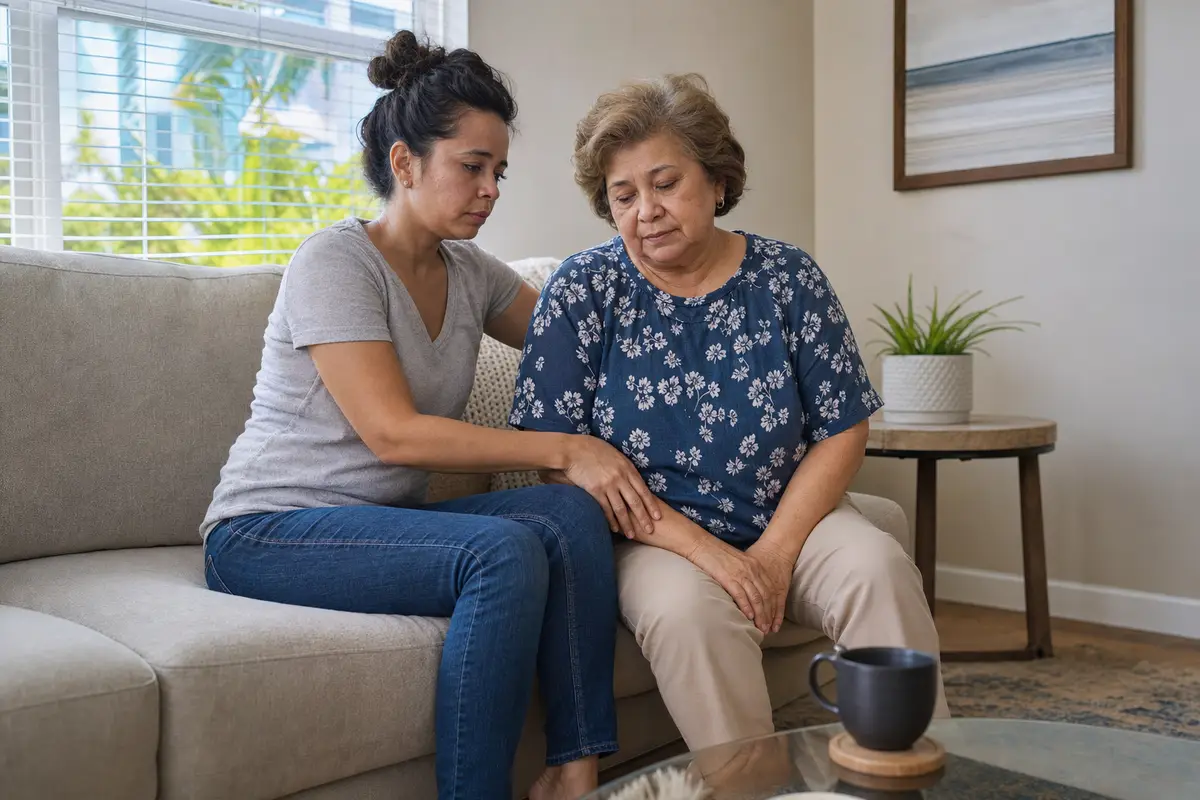
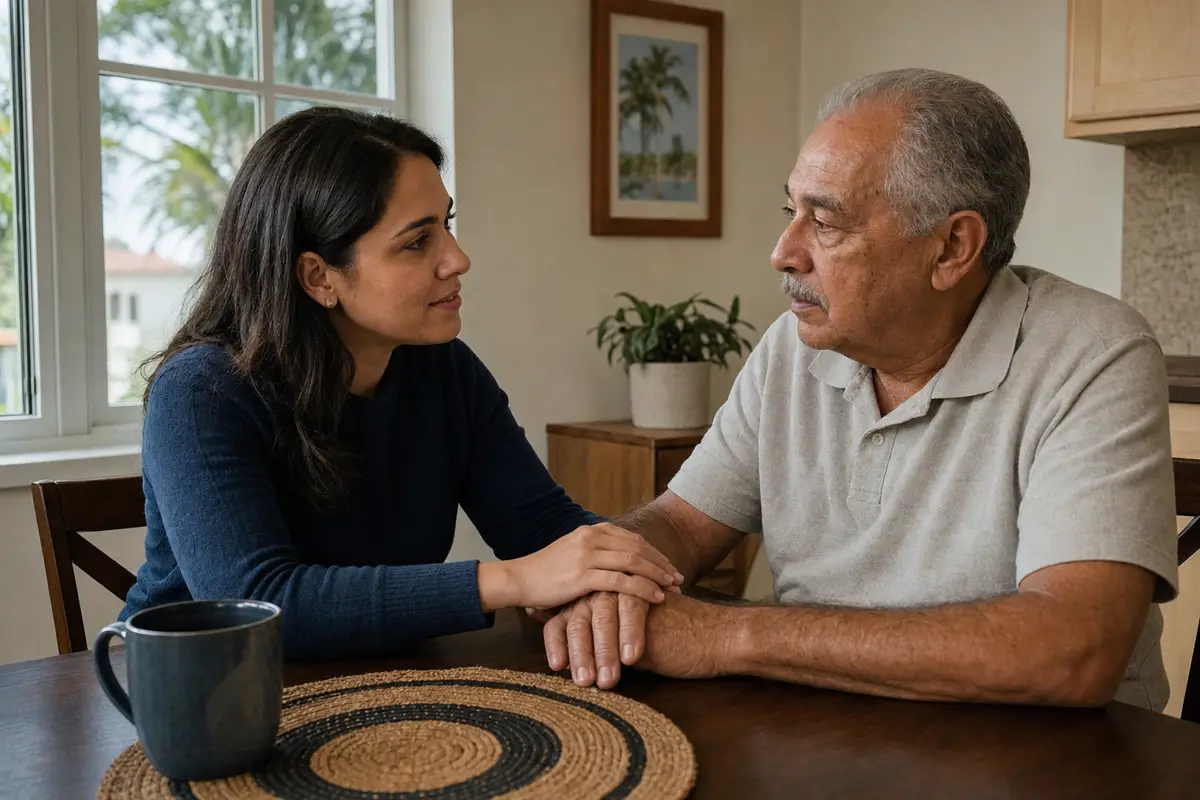
Consider a family caregiver six months into the role: stepping in for a parent who needed help, managing medications and appointments alongside a full-time job, telling themselves it’s temporary. The patience that felt reliable starts running out faster. Waking up tired becomes the norm rather than the exception. Guilt arrives whenever resentment does. That progression has a name and a pattern, and understanding it is the first practical step toward doing something about it.
This article walks through the stages of caregiver burnout, what each one looks and feels like, and what actually helps at each point. If you’re looking for a starting place to explore caregiver stress and its causes, that sibling article covers the foundation.
What Is Caregiver Burnout?
Caregiver burnout is a state of chronic physical, emotional, and mental exhaustion that develops when the demands of caregiving consistently exceed the resources available to meet them. It is not a character flaw or a sign that you love the person less. It is a predictable outcome of sustained, high-stakes work without adequate rest or support.
Burnout is different from everyday caregiver fatigue. Fatigue lifts after a good night of sleep or a few hours away. Burnout doesn’t. It accumulates across weeks and months, and it doesn’t resolve without deliberate change.
For a broader look at what caregiver support can look like, the caregiver therapy page outlines the options available to you.
The Stages of Caregiver Burnout
Researchers and clinicians describe burnout as a process rather than a single event. While different frameworks use different numbers of stages, the progression follows a consistent arc: from early-warning depletion, through withdrawal and resentment, to full collapse. Understanding where you are in that arc helps you respond rather than just react.
Stage 1: The Caregiver Takes On Too Much
Burnout almost always starts with overcommitment. In this early stage, the caregiver says yes to everything, managing medications, driving to appointments, handling finances, coordinating with medical staff, and still trying to maintain their own work and family life. This stage often feels purposeful, even energizing. The caregiver believes they can manage it all.
The warning signs here are subtle: skipping your own doctor’s appointments, dropping hobbies, feeling mildly resentful but pushing the feeling aside. Sleep starts to shorten. Exercise disappears. Meals become convenient rather than nourishing.
Most caregivers don’t recognize this stage as dangerous. It feels like dedication.
Stage 2: Stress Becomes Chronic
When overcommitment continues without relief, the body and mind stop recovering between demands. Stress becomes the baseline rather than the exception. In this stage, irritability increases. Small frustrations provoke disproportionate reactions. Physical symptoms appear, headaches, back pain, digestive issues, that a doctor may attribute to stress without identifying the source.
Emotionally, this stage brings a creeping sense that nothing you do is enough. The caregiving needs keep expanding while your capacity stays fixed or shrinks. You may start dreading the parts of caregiving you once handled without difficulty.
This is the stage where help would be most efficient, but it is also the stage where most caregivers are least likely to ask for it, because they still believe they can manage.
Stage 3: Withdrawal and Detachment
As chronic stress deepens, many caregivers begin to emotionally distance themselves from the person they’re caring for, and from everyone else. This is not indifference; it is a protective response to sustained overwhelm. The nervous system is rationing what little is left.
In practice, withdrawal looks like going through the motions: completing the physical tasks of caregiving without emotional presence. You stop sharing details about your life with friends because explaining takes too much energy. Social invitations feel like obligations you can’t meet. You may stop talking about caregiving entirely because you’re tired of people not understanding.
Isolation in this stage is dangerous. It removes the feedback and social support that could interrupt the progression.
Stage 4: Resentment and Guilt
With enough isolation and depletion, resentment surfaces. This is one of the most distressing stages for caregivers because the resentment is often directed at someone they love, and often at someone who is suffering. The guilt that follows resentment is corrosive: caregivers frequently describe feeling like a bad person for having thoughts and feelings they didn’t choose.
This stage is where caregivers begin to fantasize about escape, imagining what their life would look like if the caregiving role ended. Those thoughts are normal. They are not evidence of cruelty. They are evidence of burnout.
If you’re wondering whether what you’re experiencing crosses the threshold into burnout, recognizing a common sign of caregiver burnout offers a clear reference point.
Stage 5: Physical and Emotional Depletion
The final stage of caregiver burnout is total depletion. The physical symptoms that began as headaches and fatigue have often escalated to compromised immune function, sleep disorders, or anxiety severe enough to interfere with daily functioning. Emotionally, many caregivers at this stage describe feeling numb, neither sad nor happy, just flat.
Depression is common at this stage, and it frequently goes unrecognized for the same reason depression goes unrecognized in older adults: the symptoms, low energy, withdrawal, changes in appetite, are attributed to the circumstances rather than identified as a treatable condition.
At Stage 5, the caregiver is no longer just at risk. They need intervention.
What Caregivers Often Miss About the Person They’re Caring For
One factor that significantly increases caregiver burden is managing undiagnosed mental health conditions in the older adult. When a parent or spouse is irritable, withdrawn, or refuses to eat, caregivers often assume it is a personality change or a natural part of aging. That assumption delays care, and increases the caregiver’s load.
Clinical Insight
Depression in older adults in assisted living settings is often misunderstood as a part of normal aging and may be overlooked by health care professionals, meaning the caregiver is frequently the only person in the room asking whether something more is going on (PMC review of assisted living depression risk factors, 2017). The consequences of that missed diagnosis are concrete: a four-state assisted living study found that depressed residents were discharged to nursing homes at 1.5 times the rate of non-depressed residents, illustrating that untreated depression shortens the time a person can remain in the residence they chose (Am J Geriatr Psychiatry, 2003). The transition into residential care itself carries risk: a systematic review found that older adults who experienced their move as involuntary were more likely to develop depression, loneliness, and anger after admission, conditions that intensify caregiving demands at exactly the moment families are already adjusting (Brownie et al., 2014).
What Actually Helps at Each Stage
Burnout is not a willpower problem. Telling yourself to be more grateful, sleep more, or set better limits doesn’t work at the structural level where burnout operates. What works is a combination of reducing the caregiver’s isolated load and addressing the emotional processing that caregiving requires.
Early Stages: Restructure Before You Have To
In Stages 1 and 2, the most effective intervention is structural: redistribute the caregiving tasks before depletion makes that conversation feel impossible. This means identifying which tasks only you can do and which tasks can be shared, delegated, or hired out. It means involving siblings, neighbors, or community resources that you have been avoiding asking.
It also means building a standing appointment with a therapist, not because something is wrong, but because the work you are doing is genuinely hard and deserves dedicated processing time.
Middle Stages: Address Isolation Directly
In Stages 3 and 4, isolation is both a symptom and a driver of continued decline. The single most useful action is reconnecting with people who understand caregiving, whether that is a local support group, an online community, or a therapist who works with caregivers specifically.
Teletherapy removes the logistical barrier that stops most caregivers from seeking help. You don’t leave the house, arrange coverage, or fit an office visit into an already over-scheduled day. You open a video call at a time that works.
This is also the stage to assess whether the older adult in your care has had a mental health evaluation. Unaddressed depression or anxiety in the person you care for keeps the caregiving load unnecessarily high.
Late Stage: Crisis Requires a Different Response
At Stage 5, self-management is not enough. Full depletion needs professional support, for the caregiver’s own mental and physical health, and a serious reassessment of the caregiving structure. This may mean transitioning more care responsibilities to a facility, increasing home health support, or accepting respite care.
Seeking help at Stage 5 is not failure. It is the only rational response to an unsustainable situation. Continuing without help at this stage puts both the caregiver and the person receiving care at risk.
The Role of Therapy in Caregiver Recovery
Therapy for caregivers works differently than therapy for other presenting concerns. The goals are specific: process anticipatory grief (grief about losses that are still unfolding), reduce self-blame, rebuild a sense of personal identity outside the caregiving role, and develop practical tools for managing the ongoing emotional weight.
Evidence-based approaches like cognitive behavioral therapy help caregivers identify the thought patterns, ‘I have to do this alone,’ ‘asking for help means I’m weak’, that sustain burnout even when external circumstances improve. Structured therapy also gives caregivers a reliable space to say things they can’t say anywhere else without consequence.
For many caregivers, the most significant barrier to therapy is logistics. Teletherapy, live video sessions with a licensed clinician, eliminates the commute, the parking, and the need to arrange coverage. Sessions happen on your schedule, from wherever you are.
Frequently Asked Questions
Can caregiver burnout happen even if I love the person I’m caring for?
Yes. Burnout is a function of sustained demand without adequate recovery, it has nothing to do with how much you love someone. Many of the most devoted caregivers experience the most severe burnout precisely because they give everything without stopping to replenish.
How do I know if I’m burned out or just having a hard week?
The clearest distinction is duration and recovery. A hard week passes; burnout persists across weeks and months even when circumstances temporarily improve. If your exhaustion, irritability, or emotional flatness has been present for more than a few weeks and isn’t lifting, it warrants attention.
Is therapy only helpful at the worst stages?
No, therapy is most effective when started early, before the cumulative load becomes crisis-level. Caregivers in Stages 1 and 2 who begin therapy early often avoid reaching the later stages entirely. That said, therapy helps at any stage.
What if the person I care for also needs mental health support?
That is a separate and important concern. A licensed clinician can evaluate an older adult for depression, anxiety, or adjustment difficulties, conditions that are common, treatable, and often mistaken for normal aging. Addressing the older adult’s mental health reduces caregiver burden directly.
What to Do Next
Caregiver burnout follows a pattern, but it doesn’t follow a fixed timeline. Some people move through it quickly; others spend years in the middle stages without recognizing what’s happening. The stages described here are not a verdict, they are a map. A map is only useful if you use it to figure out where you are and choose a direction.
If you recognize yourself anywhere in this article, the caregiver support resources on this site are a practical next step. You can also go directly to the caregiver therapy page to learn how sessions work and what to expect.
Better You Therapy is a Florida-licensed mental health practice providing teletherapy statewide and on-site clinical services in Southeast Florida senior-living communities. Referral, consent, billing under Medicare and private insurance, and scheduling are handled by the practice, you navigate nothing.
For related reading, see our guide on Therapy for Caregivers: Support That Fits Your Life.
For related reading, see our guide on How to Support a Caregiver: What Actually Helps.