
Key Takeaways
- Emotional numbness, not just exhaustion, is what is a common sign of caregiver burnout that many caregivers overlook in themselves.
- Burnout builds gradually, through repeated stress without real recovery, not through one bad day.
- Physical symptoms like disrupted sleep and frequent colds often show up before caregivers name the emotional cause.
- Feeling guilty for wanting rest is a symptom of burnout, not a character flaw.
- Support delivered where you already are, in person or by video, can address burnout before it affects your health or the person you care for.
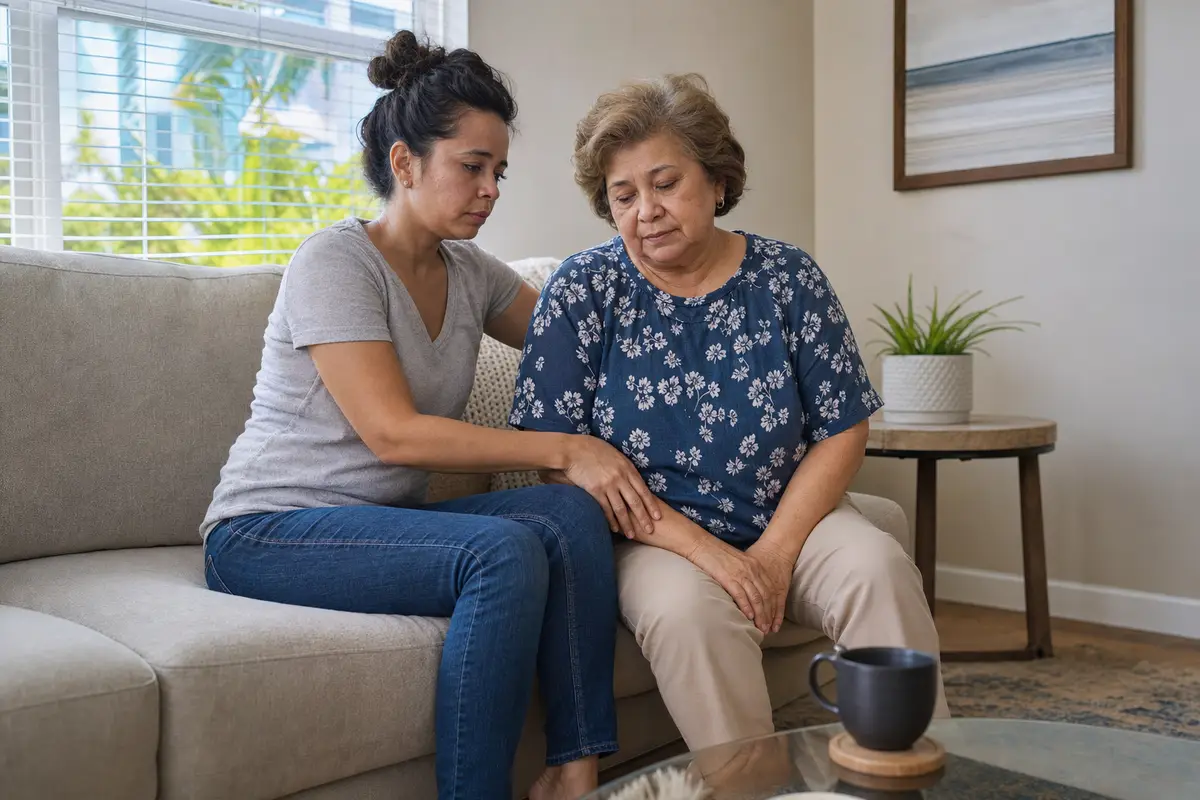
When you find yourself going through the motions during a visit with your mother, helping her with lunch, adjusting her blanket, answering the same question for the third time, without feeling much of anything, you are looking at what is a common sign of caregiver burnout. It is not sadness exactly. It is a flatness, a distance from feelings that used to come easily. Caregivers describe this moment in different words: 'I just feel numb,' 'I'm going through the motions,' 'I don't recognize myself.' The moment is real, and it has a name.
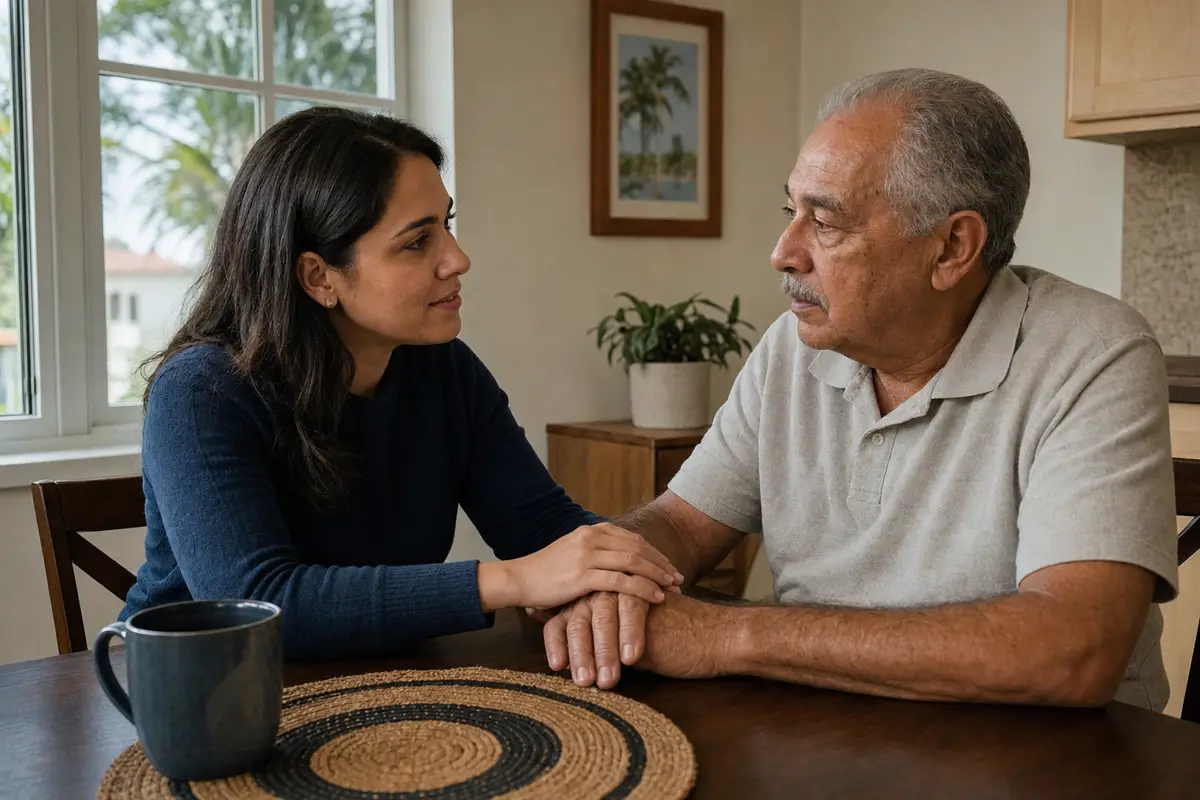
This feeling deserves attention, not shame. Burnout is not a sign that you love the person you care for any less. It is a sign that your own capacity for feeling has been drawn on for too long without enough time to recover. Many caregivers reach this point only after months of managing appointments, medications, and small emergencies alone, with no space set aside to process what any of it costs them. That absence of space, not a lack of love, is usually what is underneath the numbness.
What is a common sign of caregiver burnout?
A common sign of caregiver burnout is emotional detachment: feeling numb, flat, or disconnected from a role and a person who once felt full of meaning. This detachment often shows up alongside chronic fatigue that sleep does not fix, irritability over small things, and a growing sense of dread before caregiving tasks. Unlike ordinary tiredness, burnout does not lift with a good night’s sleep or a single day off. It tends to sit underneath everything else, coloring how a caregiver experiences even small daily interactions, until the caregiving role starts to feel like an obligation rather than a relationship.
Other signs that often travel with it
- Trouble concentrating or forgetting appointments you would normally track easily
- Withdrawing from friends or activities that used to feel restorative
- Getting sick more often, or noticing headaches and muscle tension that will not resolve
- Resenting the person you care for, then feeling guilty about that resentment
- A sense that nothing you do is enough, no matter how much you give
These signs rarely appear all at once. Most caregivers notice one or two first, often the physical ones, and only recognize the emotional detachment later, sometimes after a friend or family member points it out. Naming the pattern early makes it easier to respond before exhaustion turns into something harder to reverse.
How caregiver burnout builds over time
Burnout does not happen after one hard week. It builds through repeated stress cycles: a crisis, a brief recovery that never fully arrives, another crisis. Over months or years, the mind adapts by narrowing down what it lets you feel, because feeling everything all the time is not sustainable. That narrowing is protective in the short run and costly in the long run. It shows up as the caregiver stops reacting to things that once felt urgent, not because those things matter less, but because there is no capacity left to react.
When rest starts to feel impossible
Many caregivers describe a specific trap: the more depleted they become, the harder it feels to ask for or accept help. Tasks pile up, so stepping away seems irresponsible. The caregiver keeps going on reserves that are not there, and the body eventually registers the debt through sleep loss, illness, or the emotional flatness described above. Asking someone else to step in, even for an afternoon, can feel like admitting failure, when it is closer to basic maintenance for a role that has no natural end date.
Clinical Insight
No source content was provided for this callout, so no clinical claims, statistics, or recommendations can be presented here. Populating this section would require original text containing verifiable claims that is traced to published research (with proper “(Author, Year)” citations) or documented operational facts. Until such content is supplied, this callout is intentionally left without substantive claims to avoid presenting unsupported or fabricated information as clinical insight.
What burnout means for you and the person you care for
Unaddressed burnout affects more than the caregiver. Irritability and emotional distance change the tone of daily interactions, even when care tasks still get done correctly. Decision-making suffers too; a caregiver running on empty is more likely to make choices out of exhaustion than out of what is actually best for their family member. Small decisions, like whether to schedule another doctor’s visit or push it back a week, start to hinge on how much energy is left rather than on what is actually needed.
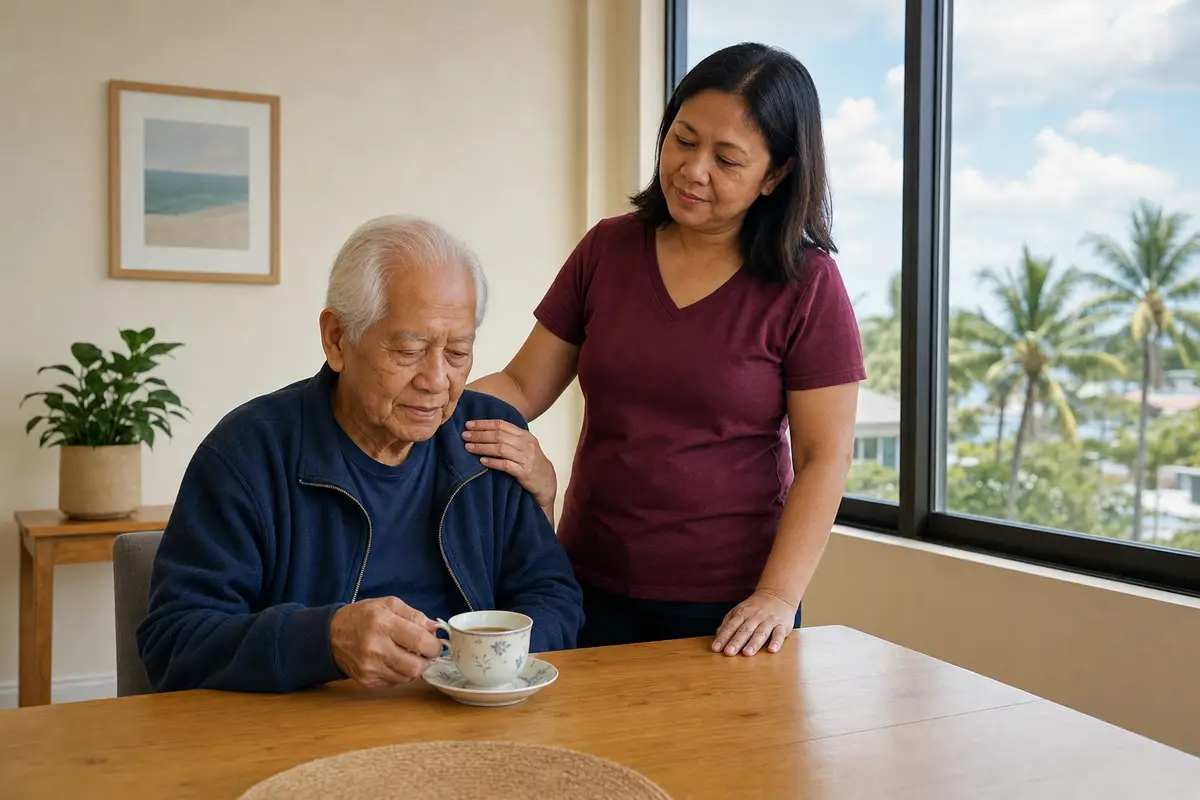
None of this means you are failing. It means the demands on you have outpaced the support around you, and that gap is fixable with the right kind of help. Many families do not realize how much of the caregiving load has fallen on one person until that person starts to withdraw, both from the role and from the relationships around it. Recognizing burnout early keeps that withdrawal from becoming permanent, for the caregiver and for the person receiving care. A caregiver who gets support early is more able to sustain the relationship over the long term, not just get through the current stretch.
Frequently asked questions
Is caregiver burnout the same as depression?
They overlap but are not identical. Burnout is tied specifically to the caregiving role and often improves when the caregiver gets relief, support, or rest. Depression can develop alongside burnout and needs its own evaluation by a licensed clinician, since it does not always resolve with a break alone. A caregiver can experience both at once, which is one reason a professional evaluation matters more than trying to self-diagnose which one is happening.
How long does caregiver burnout last if left untreated?
There is no fixed timeline. Burnout that goes unaddressed tends to deepen rather than resolve on its own, since the underlying stress usually continues. Caregivers who get support, whether through therapy, respite care, or a change in the caregiving arrangement, typically see symptoms ease within weeks of that support starting. Waiting for the caregiving situation to resolve on its own, such as a parent’s health stabilizing, rarely addresses the burnout itself.
Can teletherapy help with caregiver burnout?
Yes. Video-based therapy lets a caregiver talk with a licensed clinician without adding a drive or a waiting room to an already full schedule. Sessions can focus on the specific stress of caregiving: guilt, grief, role strain, and decision fatigue, in a format that fits around the caregiving day rather than competing with it. For caregivers managing a parent’s care from a distance, teletherapy also removes the need to coordinate an in-person appointment around someone else’s schedule.
Getting support for caregiver burnout
Recognizing a common sign of caregiver burnout in yourself is a starting point, not something you have to carry alone. Better You Therapy is a Florida-licensed mental health practice providing teletherapy statewide and on-site clinical services in Southeast Florida senior-living communities. If your family member lives in a Palm Beach, Martin, St. Lucie, or Okeechobee County community, a clinician can meet with them on-site while you get support of your own by video, without adding another appointment to your week.
Support does not require you to stop caregiving or hand off the role entirely. It means having somewhere to bring the exhaustion, the guilt, and the moments of numbness so they do not have to stay buried under the next task on the list. Getting started does not require a referral or a diagnosis in hand; it starts with a conversation about what has been happening for you. Explore caregiver support resources or learn more about caregiver therapy services to find a starting point that fits your schedule.