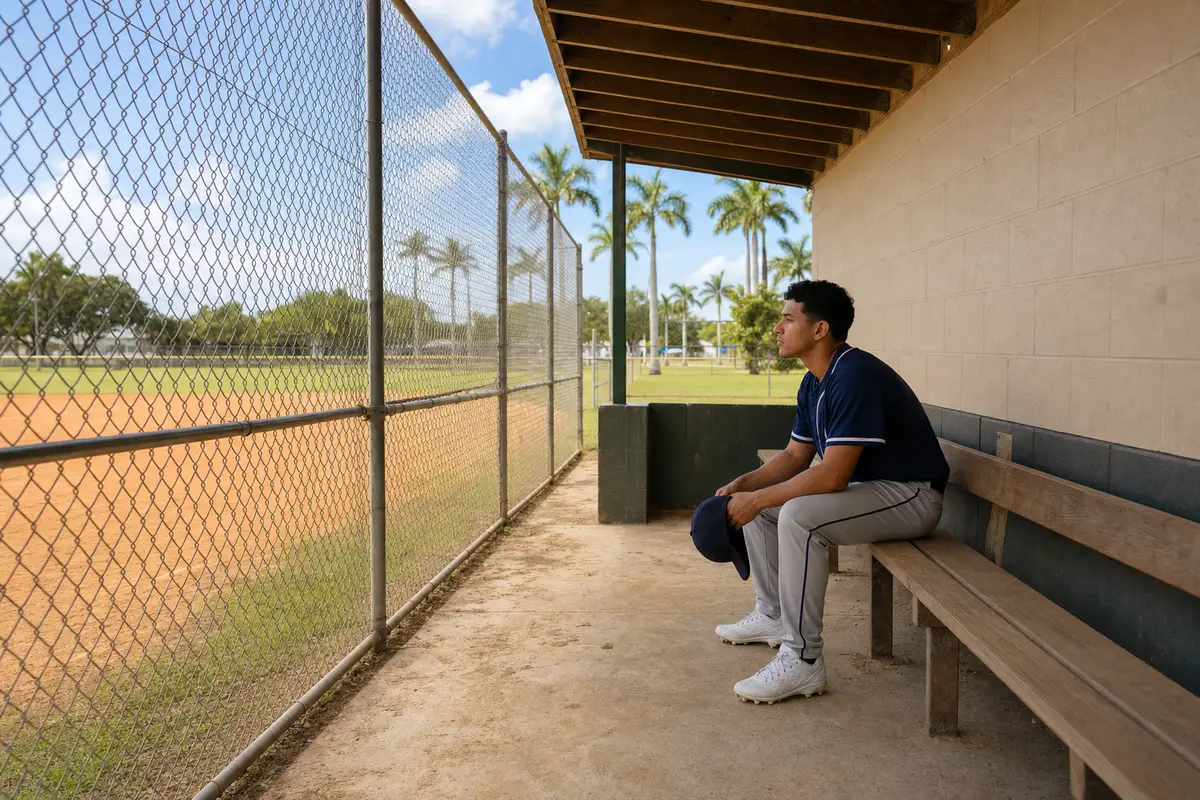
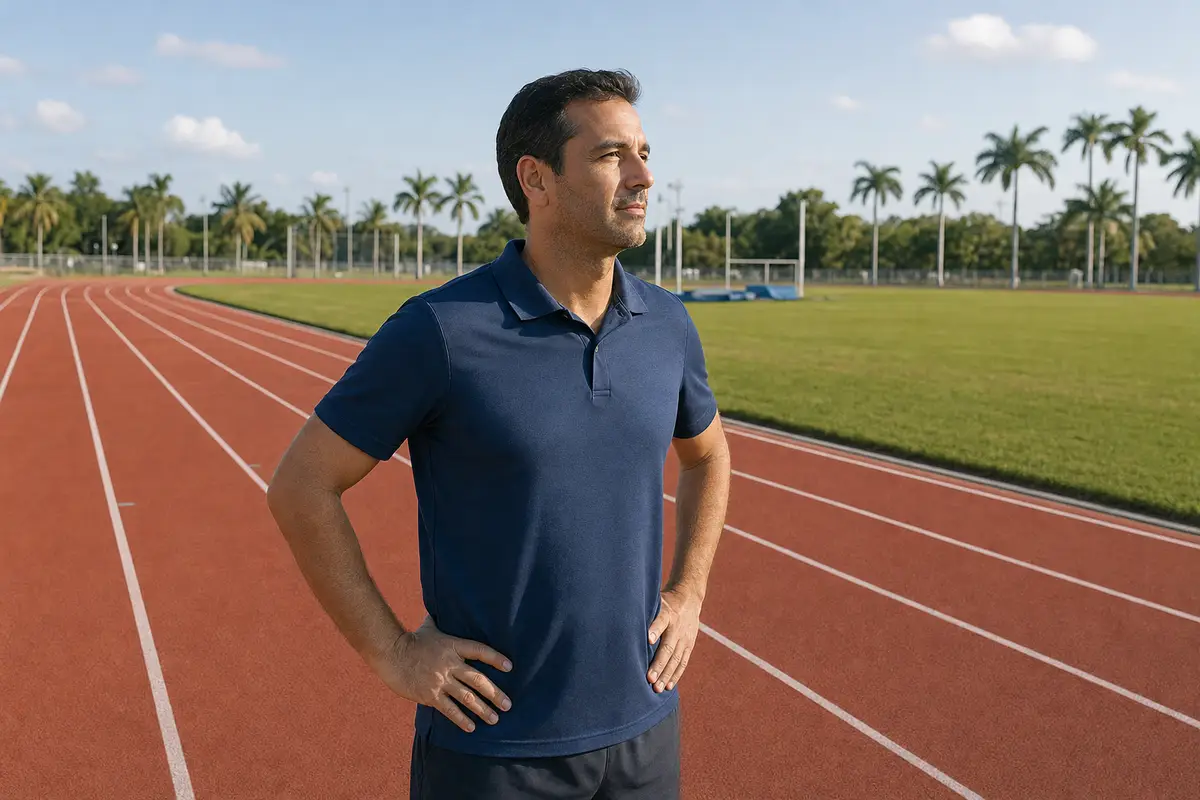
Many athletes train their bodies for thousands of hours and spend almost no structured time training their minds. Yet every coach, at every level, will tell you that competition is won or lost as much between the ears as it is on the field. Understanding what does a sports psychologist do helps athletes, families, and coaches make sense of a discipline that has long existed in high-performance sport but is now reaching recreational competitors, youth programs, and general adults who want to perform better under pressure.
Key Takeaways
- Sports psychologists help athletes strengthen the mental skills that directly shape performance: focus, confidence, composure under pressure, and resilience after setbacks.
- The work is not limited to elite professionals. Recreational athletes, youth competitors, and adults returning to sport after injury all benefit from sports psychology support.
- Common methods include goal-setting, visualization, breathing regulation, self-talk restructuring, and pre-performance routines.
- Sports psychologists are licensed mental health professionals. They can also address anxiety, depression, and other clinical concerns that intersect with athletic life.
- Teletherapy has made sports psychology accessible to athletes who live far from a specialist or whose training schedules make in-person appointments difficult.
- How Is a Sports Psychologist Different from a Sports Coach or Mental Performance Coach?
What Does a Sports Psychologist Do, Exactly?
A sports psychologist is a licensed mental health professional with specialized training in how psychological factors influence physical performance and how participation in sport affects mental health. The role has two distinct but connected lanes.
The first lane is performance enhancement. This is the work most people picture: helping an athlete manage pre-competition nerves, rebuild confidence after a slump, or maintain focus during a high-stakes moment. The tools here are practical and teachable. They include visualization (mentally rehearsing a skill or scenario before executing it), attentional control (learning where to direct focus and how to redirect it when it drifts), arousal regulation (using breathing, body posture, or self-talk to move the nervous system to an optimal state), and goal-setting frameworks that keep an athlete progressing without becoming overwhelmed.
The second lane is clinical mental health. Athletes experience depression, anxiety, disordered eating, grief, trauma, and burnout at rates comparable to the general population, and sometimes higher. A sports psychologist can assess and treat these conditions while understanding the specific culture, pressures, and identity questions that come with athletic life. That dual competence is what distinguishes the specialty from a general performance coach.
Who Seeks Out a Sports Psychologist?
The short answer: a much wider range of people than most assume.
Elite and Competitive Athletes
Professional and collegiate athletes often have access to sports psychologists through their teams or programs. The work at this level tends to focus on performance refinement, pressure management, and recovery from injury. An athlete returning from a torn ligament, for example, frequently faces psychological barriers to re-entry. Fear of re-injury can cause hesitation in movement patterns that were previously automatic. A sports psychologist addresses that fear directly and systematically.
Youth and Adolescent Athletes
Young athletes face pressures that go well beyond sport. Identity, social comparison, parental expectations, and academic demands all intersect with performance. Consider a teenage swimmer who has competed since age eight and now struggles with motivation and dread before meets. That picture is common, and it calls for a professional who understands sport-specific burnout as well as adolescent development.
Recreational and Adult Athletes
Adults training for a marathon, returning to tennis after a decade away, or competing in a masters weightlifting meet have genuine psychological needs that recreational performance coaches rarely address. Fear of failure, perfectionistic thinking, and difficulty tolerating physical discomfort all respond to the same evidence-based techniques used with professional athletes.
Non-Athletes Using Sport-Adjacent Skills
The mental skills developed in sports psychology translate directly to high-pressure professional environments. Surgeons, musicians, first responders, and executives work with sports psychologists to sharpen focus, manage performance anxiety, and recover more quickly from high-stakes mistakes. The discipline travels well beyond athletics.
What Happens in a Sports Psychology Session?
Sessions are structured conversations paired with skill-building practice. They look and feel more like therapy than coaching, because they are therapy. A first appointment typically involves an assessment of the athlete’s performance history, current concerns, stressors outside sport, and mental health background. From there, a plan takes shape.
Building a Mental Skills Toolkit
Most sports psychologists use a toolkit approach. Skills are introduced one at a time, practiced in session, and then assigned as homework before the next training block or competition. A few of the most common tools:
Visualization and mental imagery. The athlete rehearses a specific performance scenario in vivid sensory detail. Research in motor learning consistently shows that mental practice activates neural pathways in ways that complement physical practice. Athletes use this skill before routines, races, and even comeback attempts after injury.
Self-talk restructuring. Every athlete has an internal narrator. When that narrator defaults to criticism or catastrophizing (‘I always choke,’ ‘my legs feel terrible, this race is over’), performance suffers. A sports psychologist helps the athlete identify counterproductive self-talk patterns and replace them with cues that are accurate, present-tense, and instructional rather than evaluative.
Arousal regulation. The nervous system can be too activated (panic, tunnel vision, muscle tension) or too flat (low energy, poor reaction time). Breathing techniques, progressive muscle relaxation, and activation cues help athletes find and return to their personal performance zone.
Pre-performance routines. A routine is not superstition. It is a behavioral sequence that reliably brings the athlete to an optimal mental state. A golfer’s pre-putt routine, a pitcher’s between-inning sequence, a sprinter’s block setup. The psychologist helps design routines that are portable, repeatable, and grounded in what actually works for that individual.
Goal-setting. Outcome goals (win the championship) matter for motivation but are largely outside an athlete’s direct control. Process goals (maintain stroke mechanics through fatigue) are within control and have a stronger relationship to consistent performance. Sports psychologists teach athletes to set goals at multiple levels and to shift focus appropriately during competition.
Addressing Clinical Mental Health Alongside Performance
Sometimes an athlete comes in asking for help with performance and surfaces a clinical concern in the first few sessions. Perfectionism that started as a strength has become paralyzing. Overtraining has crossed into depression. An eating pattern that ‘worked’ at a lower competitive level has become harmful. A licensed sports psychologist can pivot to address these concerns directly, without the athlete needing a separate referral to a separate provider who has no context for their life.
This continuity matters. Athletes are often reluctant to seek mental health support, and the barrier to entry is already high. Having one trusted clinician who holds both the performance piece and the clinical piece reduces the friction significantly.
How Is a Sports Psychologist Different from a Sports Coach or Mental Performance Coach?
This distinction confuses a lot of people, and it is worth being clear about.
A mental performance coach (sometimes called a mental skills coach) is not a licensed mental health professional. They may have excellent training in sport science and peak performance frameworks, and they can do meaningful work on focus, motivation, and goal-setting. However, they cannot diagnose or treat mental health conditions, and if a clinical concern emerges, they are ethically required to refer out. That referral process adds friction at exactly the moment when continuity of care matters most.
A sports psychologist holds a graduate-level license in psychology or a related mental health field. They have supervised clinical hours, can diagnose, and can treat. They carry professional liability, adhere to ethical codes, and maintain confidentiality in ways that coaches legally do not.
In practical terms, the distinction shows up most clearly when an athlete’s performance concern has a clinical root. Persistent underperformance linked to anxiety, disordered eating patterns that intersect with sport culture, or emotional responses to injury that go beyond normal frustration all require a licensed clinician. A performance coach may recognize the issue but cannot treat it. A sports psychologist can assess the concern, treat it, and continue the performance work inside the same relationship.
If your concern is purely performance optimization and no clinical factors are present, either professional may serve you well. If mental health is any part of the picture, a licensed sports psychologist is the appropriate choice.
Teletherapy and Sports Psychology
For most of sports psychology’s history, access depended on geography. If you lived near a university with a sport science program or a city with a major professional team, you could find a specialist. If you lived in a rural area, or if your training schedule made daytime appointments impossible, you simply went without.
Teletherapy has changed that equation in concrete ways. Video-based sessions allow athletes anywhere to work with a licensed sports psychologist on a schedule that fits training blocks, competition travel, and academic demands. The format works well for talk-based skill development. Visualization scripts, self-talk work, and goal-setting sessions translate directly to video without meaningful loss of effectiveness.
For competitive athletes, the scheduling flexibility is often as valuable as the access itself. Early morning slots before practice, evening sessions after training, and quick check-ins around travel days all become possible when the session is a video call rather than a commute. Athletes who travel frequently for competition can maintain continuity with the same clinician throughout a season rather than starting over with someone new in each city.
For athletes in Florida, exploring sports psychology resources through a licensed practice is now genuinely practical regardless of location or how demanding the training calendar becomes.
What Sports Psychology Is Not
A few common misconceptions are worth naming directly.
Sports psychology is not only for athletes who are struggling. Many of the highest-performing competitors in the world work with a sports psychologist not because something is wrong but because they understand that mental skills require the same deliberate training as physical ones. Seeking this support from a position of strength is common and rational.
It is not a quick fix. The mental skills that produce durable performance improvements take practice over weeks and months, not one or two sessions. An athlete who commits to the process builds a toolkit they carry into every future competition, which is a different kind of return than a single corrective conversation.
It is not a sign of weakness. The stigma around mental health support in athletic culture is real but eroding steadily. Seeking this kind of help is increasingly understood as part of a serious training commitment. The athletes who treat mental preparation as optional are the ones leaving performance on the table, not the ones who invest in it.
And it is not the same as sports medicine. A sports psychologist addresses psychological factors affecting performance and well-being. Questions about physical injury management, rehabilitation timelines, or pain belong with a sports medicine physician or physical therapist, though the two disciplines often work alongside each other during injury recovery.
Is Sports Psychology Covered by Insurance?
Coverage depends on the provider’s licensure and the nature of the services billed.
When sessions address a diagnosed mental health condition (anxiety, depression, trauma, eating disorders), they typically fall within standard mental health benefits and may be covered by private insurance or Medicare. In these cases, the sports psychologist is functioning as a clinical mental health provider, and the claim is processed the same way any therapy session would be.
Pure performance enhancement work without a clinical diagnosis is often categorized differently and may be out-of-pocket. The line between performance work and clinical work is not always sharp in practice, which is why the billing question is worth raising with the specific provider before the first session.
The best approach is to contact the practice directly to understand how services are billed, which insurance plans are accepted, and what documentation might support a coverage determination. Most licensed practices can walk you through this in a brief intake call before any commitment is made.
Finding the Right Sports Psychologist
When evaluating a provider, a few questions guide the search and help clarify whether the fit is right for your specific situation:
- Are they licensed in your state as a mental health professional (psychologist, licensed counselor, licensed therapist)?
- Do they have documented training or supervised experience in sport and performance psychology?
- Do they work with athletes at your level and in your sport, or with performance concerns similar to yours?
- Can they address clinical mental health concerns if they emerge, or would you need a separate referral?
- Do they offer teletherapy if in-person access is limited?
No single sports psychologist is the right fit for every athlete. Sport background, personality, and communication style all shape the working relationship, and that relationship is the foundation the skill-building rests on. Most practitioners offer an initial consultation specifically so both parties can assess the fit before committing to a course of work. That conversation is a reasonable and low-risk starting point.
Asking for references or reading practitioner bios carefully also helps. A clinician who has worked closely with athletes in your sport or at your competitive level will have a more intuitive understanding of the pressures you describe.
Getting Support Through Better You Therapy
Better You Therapy is a Florida-licensed mental health practice providing teletherapy statewide and on-site clinical services in Southeast Florida senior-living communities. Licensed clinicians are available by video for adults across Florida, including those managing performance-related anxiety, sport-adjacent stress, or clinical concerns that intersect with an active lifestyle.
The intake process is designed to be straightforward. You describe your situation, the clinician helps you understand what the work would look like for your specific goals, and you decide together whether to proceed. There is no pressure and no obligation attached to that first conversation.
If you have been wondering whether the mental side of performance deserves the same structured investment you give your physical training, that question is worth exploring with someone qualified to help you answer it. Reaching out to schedule an initial conversation is a practical next step.