Key Takeaways
- Postpartum anxiety shows up as racing thoughts, physical tension, and a constant sense of dread, not just worry.
- Learning how to deal with postpartum anxiety starts with naming what’s happening instead of dismissing it as normal new-parent stress.
- Grounding techniques, sleep protection, and reducing isolation are practical daily tools that address symptoms directly.
- Postpartum anxiety is treatable with therapy, and most parents see real improvement once they start care.
- A Florida-licensed mental health practice offers teletherapy statewide and on-site services in Southeast Florida senior-living communities, though postpartum support itself is delivered through virtual therapy for new parents.
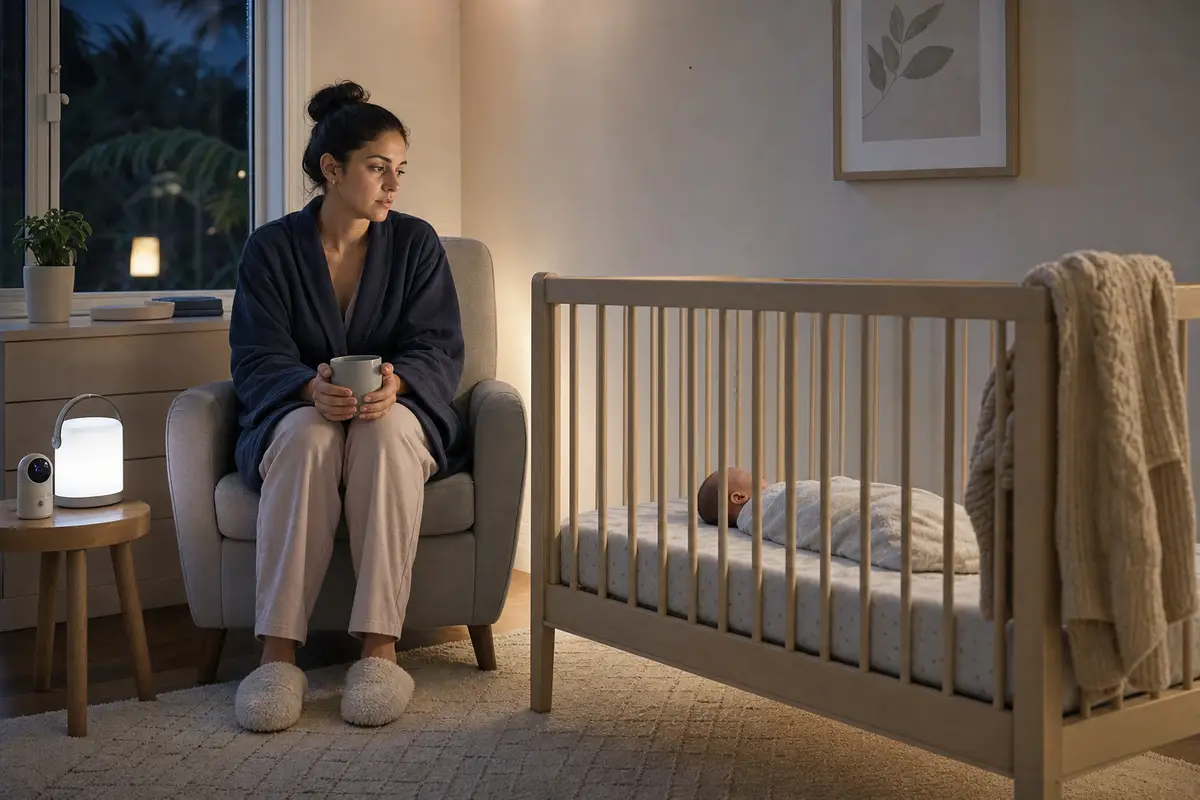
When your mind won’t stop running through worst-case scenarios about your baby, your body, or your ability to cope, you’re not imagining things, and you’re not failing at motherhood. You’re describing a real and common experience. Figuring out how to deal with postpartum anxiety is one of the most urgent questions new parents search for, at 3 a.m., phone brightness turned down low, baby finally asleep, heart still pounding.
This guide walks through what’s actually happening in your body and mind, and what to do about it today, this week, and longer term.
What postpartum anxiety actually feels like
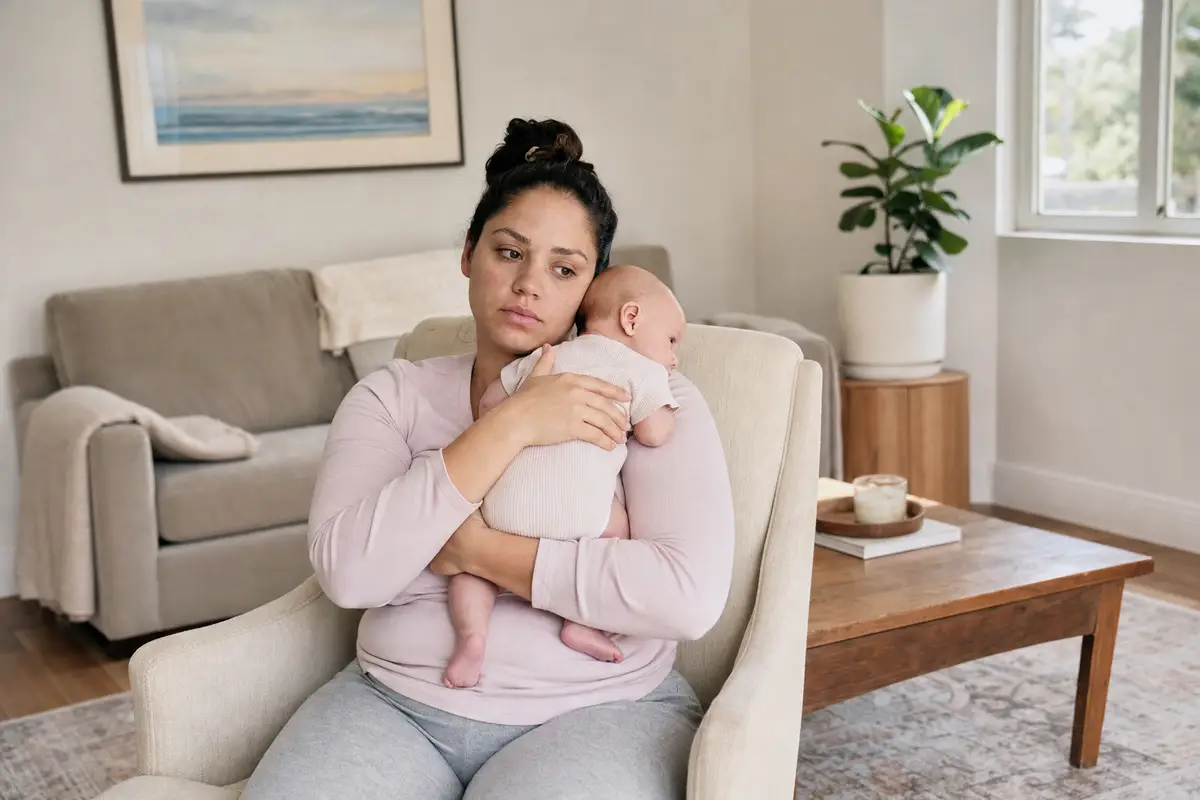
Postpartum anxiety isn’t just “worrying a lot.” It’s a persistent state of alertness that doesn’t turn off, even when there’s no immediate threat. Many parents describe it as a hum of dread underneath everything else: feeding, showering, trying to sleep.
Common signs include racing or repetitive thoughts (frequently about the baby’s safety), a tight chest or stomach, trouble sleeping even when the baby is sleeping, irritability, and an urge to check on the baby repeatedly. Some parents also notice physical symptoms: dizziness, nausea, or a racing heart that feels disconnected from anything happening around them.
If you want the fuller clinical picture, including how it differs from postpartum depression, this overview of postpartum anxiety breaks down the symptoms and causes in more detail.
How to deal with postpartum anxiety: where to start
The first step in how to deal with postpartum anxiety is separating the thoughts from the facts. Anxious thoughts feel urgent and true in the moment, but urgency isn’t the same as accuracy. A thought like “something is wrong with the baby” arrives with full physical intensity even when nothing is actually wrong.
This doesn’t mean dismissing the feeling. It means building a short pause between the thought and the reaction. That pause is where coping tools work.
Ground your body first
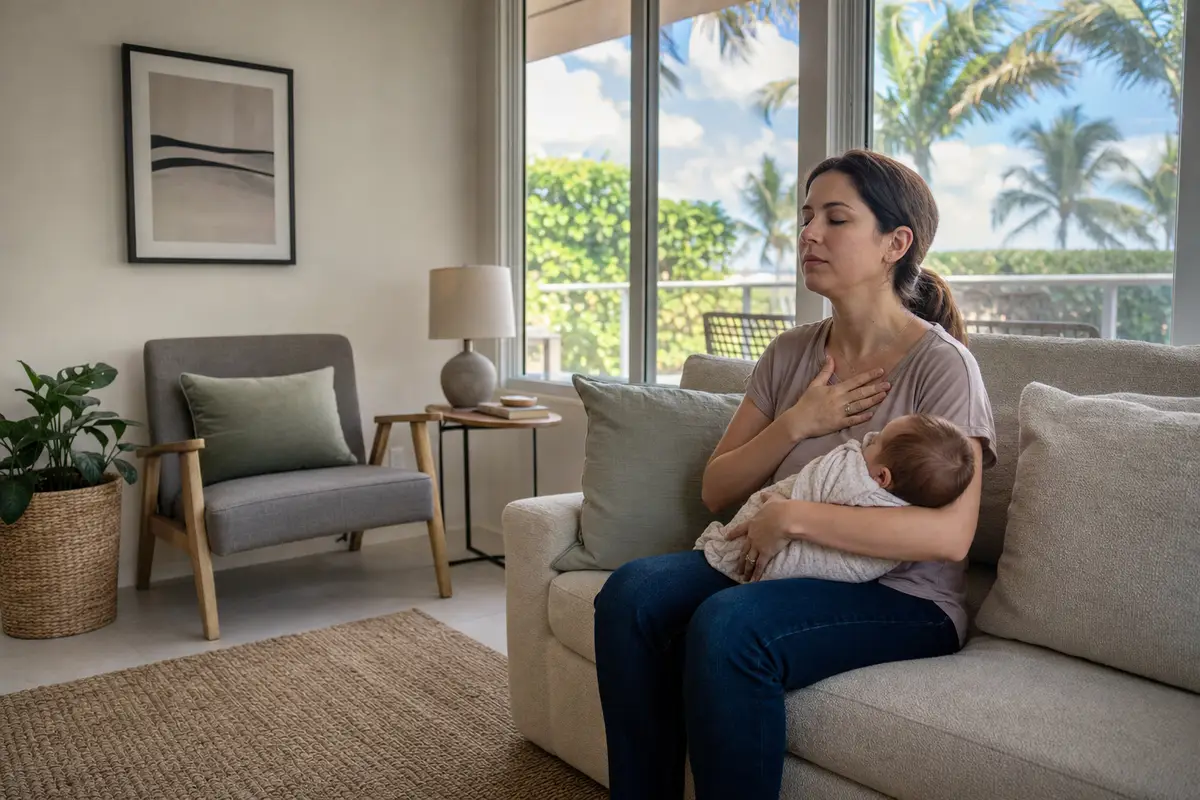
Anxiety lives in the body before it fully forms into words. Slow, extended exhales (longer than the inhale) signal to your nervous system that the immediate danger has passed. Cold water on your wrists or face, a few minutes of walking, or naming five things you see, four you hear, and three you touch all interrupt the spiral before it builds momentum.
These aren’t cures. They’re brakes. Using them doesn’t make the anxiety disappear forever, but it buys you room to think clearly for the next few minutes, which is enough to change what happens next.
Protect sleep like it’s medical treatment, because it is
Sleep deprivation and anxiety feed each other directly. A tired brain produces more intrusive thoughts and has less capacity to manage them. If a partner, family member, or friend takes one night feeding or one early morning so you get a stretch of uninterrupted sleep, that single change reduces anxiety symptoms more than any single coping skill.
This isn’t about sleeping “enough” in some ideal sense. It’s about getting one real block of rest, consistently, rather than fragments all week.
Reduce isolation on purpose
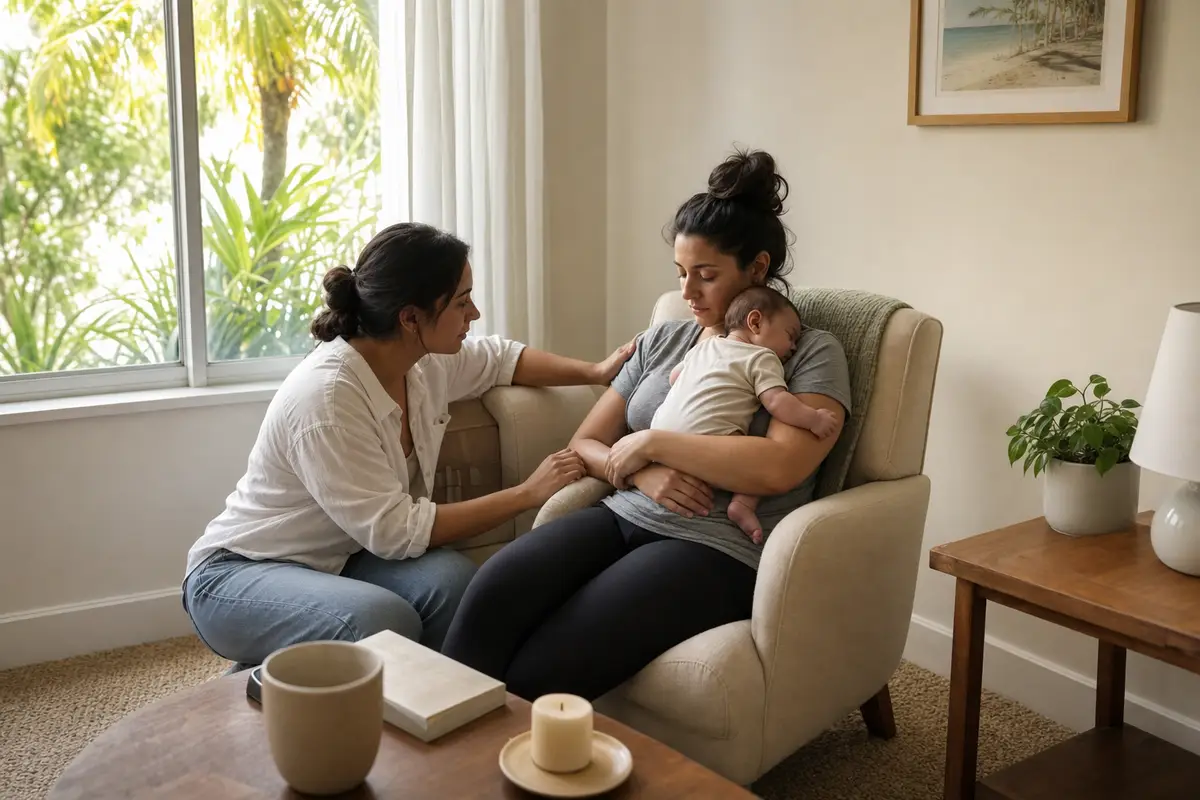
Anxiety thrives in isolation, where anxious thoughts go unchecked by outside perspective. A short text to another parent, a walk with a friend, or a phone call to someone who won’t minimize what you’re feeling all interrupt that loop. You don’t need a big support system. You need one or two people you’re honest with.
Limit the research spiral
Searching symptoms late at night feels productive but increases anxiety rather than resolving it. If you notice you’re deep in a search spiral about your baby’s health or your own symptoms, set a hard stop: close the tab, write the question down, and bring it to a pediatrician or your own provider during daytime hours instead.
Why postpartum anxiety happens
The period after birth involves a sharp hormonal shift, major sleep disruption, and a complete change in daily responsibility, all at once. Your body is recovering physically while your nervous system is on high alert for a new, vulnerable person who depends on you entirely. That combination produces anxiety in anyone, regardless of how prepared or capable you are.
Some parents also experience a related but distinct symptom: postpartum rage, a sharp, sudden irritability or anger that feels alarming and out of character. If that’s part of your experience, this explanation of postpartum rage covers why it happens and what helps.
When daily tools aren’t enough
Coping strategies help manage symptoms day to day, but they don’t resolve postpartum anxiety on their own if it’s persistent or intense. If anxiety interferes with your ability to eat, sleep, care for yourself, or connect with your baby, that’s a signal the anxiety has moved past what self-management handles alone.
Therapy for postpartum anxiety involves cognitive behavioral therapy, which directly addresses the thought patterns driving the anxiety, or other structured talk therapy approaches focused on new-parent mental health. A therapist also helps rule out postpartum depression or screens for postpartum OCD, which shares some features with postpartum anxiety but needs different treatment.
If you’re wondering whether what you’re feeling will pass on its own, this article on how long postpartum anxiety lasts and this one on when postpartum anxiety typically starts walk through the timeline, and this guide on when postpartum anxiety goes away addresses what influences recovery time.
For related reading, see how to help postpartum anxiety.
For related reading, see What Does Postpartum Anxiety Feel Like.
Frequently asked questions
How do I deal with postpartum anxiety at 3 a.m. when I can’t sleep?
Focus on slowing your breathing first, with exhales longer than inhales, since this calms the physical alarm response before you try to reason with the thoughts. Avoid searching symptoms online in that moment. If you’re awake past 20 minutes, get up, sit somewhere dim and quiet, and write down the specific worry so it’s out of your head, then try again.
Is postpartum anxiety different from just being a worried new parent?
Yes. Some worry after having a baby is expected and even useful. Postpartum anxiety is distinguished by its intensity, persistence, and physical symptoms, things like a racing heart, chest tightness, or an inability to relax even when the baby is safe and settled. If the worry doesn’t ease once the immediate situation resolves, that’s a meaningful difference.
Does postpartum anxiety go away without treatment?
Some mild postpartum anxiety eases on its own as hormones stabilize and sleep improves. Moderate to severe postpartum anxiety needs active intervention, whether that’s therapy, lifestyle changes, or both, to resolve fully rather than just becoming more manageable.
What’s the difference between postpartum anxiety and postpartum OCD?
Postpartum anxiety involves general, free-floating worry and physical tension. Postpartum OCD involves specific, intrusive, often disturbing thoughts paired with compulsive behaviors meant to neutralize them, like repeated checking rituals. Both are treatable, but a clinician needs to distinguish between them to recommend the right approach.
Should I talk to my OB, my pediatrician, or a therapist first?
Any of the three is a reasonable starting point, since they each screen for postpartum anxiety and refer you onward. An OB or midwife is useful if you’re still in the early postpartum period and want a provider who already knows your medical history. A therapist is the direct path if you’re ready to start treatment specifically for the anxiety itself.
If what you’re feeling has moved past what daily coping tools manage, the postpartum support section of our site has more on what treatment actually looks like and how to take the next step. Better You Therapy is a Florida-licensed mental health practice providing teletherapy statewide and on-site clinical services in Southeast Florida senior-living communities; postpartum therapy is available through virtual sessions for parents anywhere in Florida. If you’d rather talk to someone directly about what you’re experiencing, reaching out starts here.
If you or someone you know is in immediate danger, call or text 988 (Suicide & Crisis Lifeline).