Key Takeaways
- Postpartum anxiety often feels physical first: a racing heart, tight chest, stomach knots, and trouble sleeping even when the baby is asleep.
- The mental experience includes intrusive worst-case thoughts about the baby’s safety, a constant sense of dread, and an inability to turn worry off.
- It is different from normal new-parent worry because it does not ease with reassurance and interferes with daily functioning.
- Postpartum anxiety is treatable with structured, evidence-based therapy; it does not require you to simply wait it out.
- Noticing the pattern early and naming it is the first concrete step toward relief.
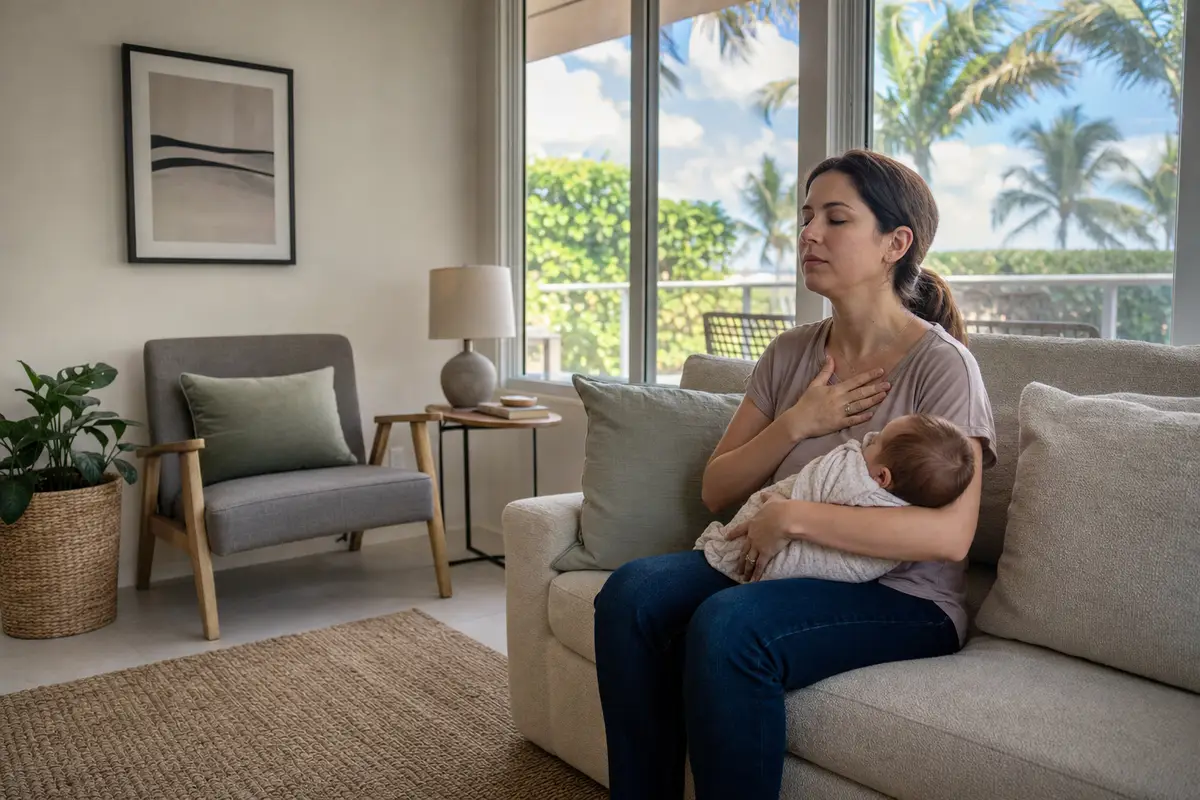
You’re holding your sleeping baby, everything is quiet, and your heart is still pounding like something is wrong. Nothing is wrong. But your body will not get the message. If you’ve been asking yourself what does postpartum anxiety feel like because the worry in your chest will not let go, you are describing a real, recognizable experience, not a personal failing.
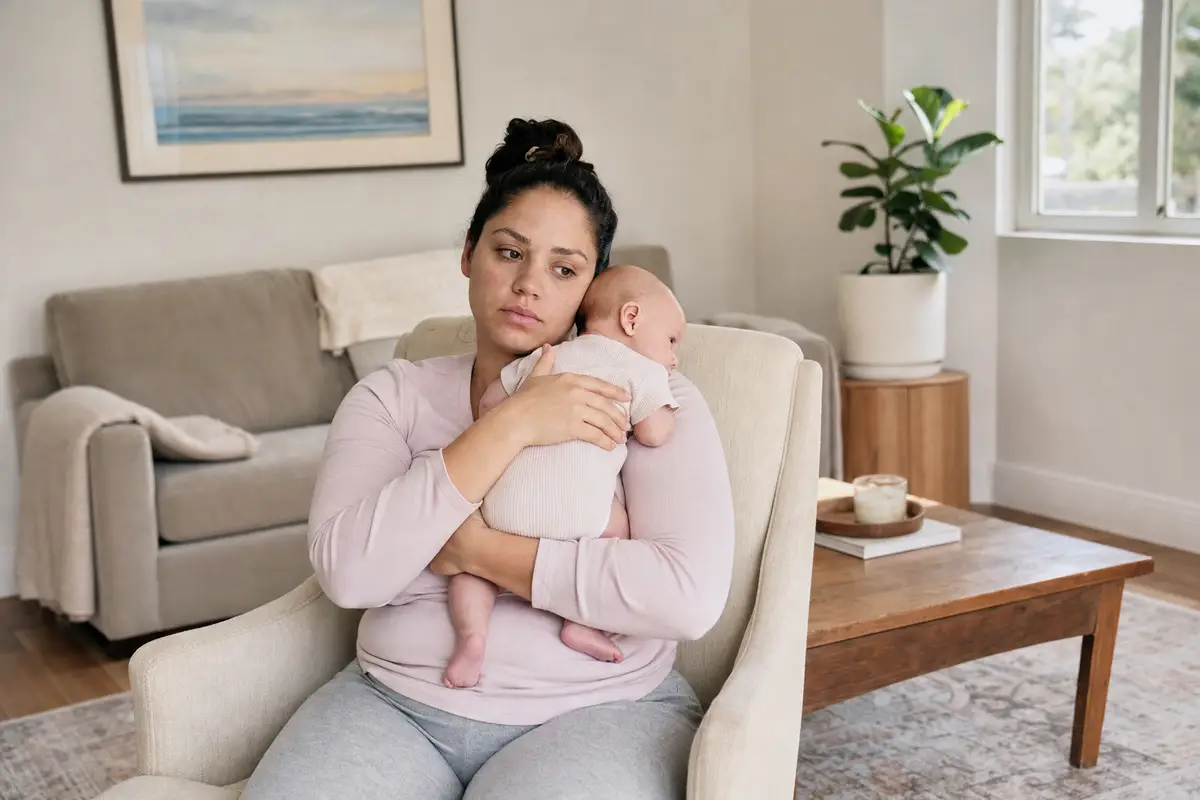
Many new mothers expect sadness to be the hallmark of a postpartum mental health struggle. Anxiety shows up differently, and it often hides in plain sight: a mother who seems ‘on top of it,’ checking the baby monitor every ten minutes, running through disaster scenarios while folding laundry. She’s not overreacting. She’s experiencing a specific, identifiable set of symptoms that deserve a name.
What does postpartum anxiety feel like in the body?
Postpartum anxiety feels physical before it feels emotional for many women. A racing or pounding heart, shallow breathing, a tight or heavy chest, and a stomach that will not settle are common. Some describe a constant low-grade buzzing in their body, as if they drank too much coffee, even when they haven’t had any.
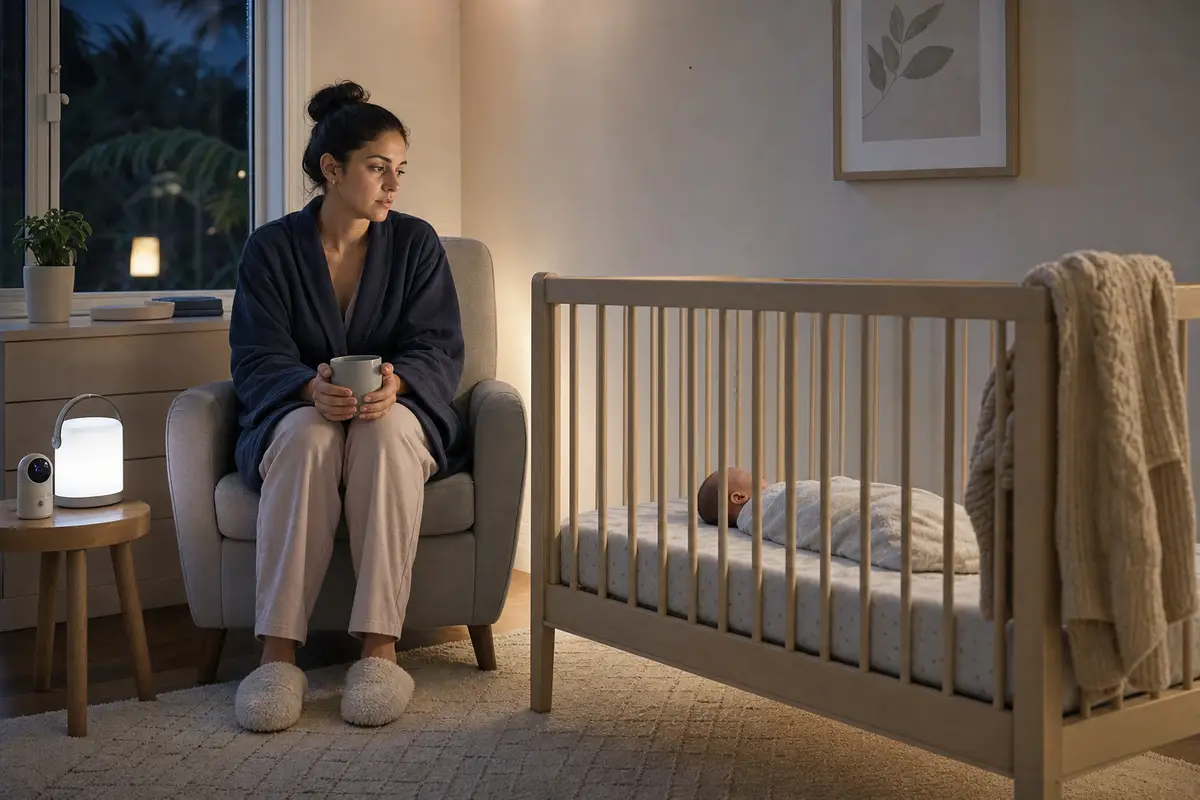
Sleep is often the clearest casualty. A mother with postpartum anxiety frequently stays awake even when the baby is finally resting, because her mind will not stop scanning for the next possible problem. This is different from the exhaustion of new parenthood; it’s a nervous system stuck in an alert state, unable to downshift.
Other physical signs are:
- Muscle tension, especially in the jaw, shoulders, and neck
- Nausea or appetite changes unrelated to postpartum recovery
- Dizziness or a lightheaded feeling during moments of worry
- Hot flashes or chills that come with no clear trigger
These sensations are often mistaken for a medical problem, and some mothers end up in urgent care convinced something is physically wrong before anyone names it as anxiety. That confusion is common and understandable. The body’s alarm system is doing exactly what it’s built to do; it’s just firing too often and too hard.
What does postpartum anxiety feel like mentally and emotionally?
Mentally, postpartum anxiety feels like a mind that will not stop running worst-case scenarios about the baby’s safety. Thoughts arrive uninvited: What if they stop breathing. What if I drop them. What if something is wrong and I don’t catch it in time. These thoughts are intrusive and disturbing, arriving even when there is no real threat present.
The emotional layer underneath is often dread, not sadness. A persistent sense that something bad is about to happen, paired with an inability to relax even during calm, safe moments. Reassurance from a partner, a pediatrician, or a friend helps for a few minutes and then the worry returns, often within the hour.
Some mothers describe a need for control that feels impossible to satisfy: triple-checking the car seat buckle, re-reading feeding schedules, refusing to leave the baby with anyone because no one else will do it ‘right.’ This isn’t about being a perfectionist. It’s the mind trying to manage an anxiety it cannot otherwise resolve.
Irritability is part of the picture too. Postpartum anxiety and postpartum rage often travel together, because a nervous system under constant threat has a short fuse. Snapping at a partner over something small, then feeling intense guilt afterward, is a familiar cycle for many mothers living with untreated anxiety.
How is this different from normal new-parent worry?
Every new parent worries. The difference is whether the worry resolves and whether it interferes with daily life. Ordinary concern about a baby’s health fades once a question is answered; postpartum anxiety persists regardless of reassurance and keeps circling back to the same fears, or finds new ones.
Function is the clearest marker. If worry is keeping you from sleeping even when you have the chance, from leaving the house, from letting anyone else hold the baby, or from feeling present during feedings, that’s a sign the anxiety has moved past typical new-parent nerves. A full breakdown of what distinguishes clinical anxiety from everyday worry is covered in our guide to what postpartum anxiety actually is.
Timing matters less than people assume. Postpartum anxiety doesn’t always start in the first weeks. Some mothers notice it months later, often when they return to work or when a second stressor hits. If you’re trying to figure out when postpartum anxiety typically starts, the honest answer is that it varies more than most people expect.
What postpartum anxiety is not
Postpartum anxiety is not the same as postpartum depression, though the two overlap often. Depression typically involves low mood, numbness, and loss of interest. Anxiety typically involves hyperarousal, dread, and intrusive worry. A mother can have one, the other, or both at once.
It is also not a sign of bad mothering. The intrusive thoughts that come with postpartum anxiety, including unwanted images of harm coming to the baby, are a symptom of an overactive threat-detection system, not a reflection of intent or desire. These thoughts are distressing precisely because they conflict with how much the mother cares.
If you or someone you know is in immediate danger, call or text 988 (Suicide & Crisis Lifeline).
What actually helps
Structured therapy for postpartum anxiety works by addressing both the physical arousal and the thought patterns driving it. Cognitive behavioral therapy helps a mother identify the specific worry loops she’s caught in and practice responding to them differently, rather than getting pulled into checking or reassurance-seeking behaviors that make the anxiety worse over time.
Body-based approaches matter too. Because postpartum anxiety lives in the nervous system, not just the mind, therapy often includes breathing techniques, grounding exercises, and sleep-focused strategies that help the body learn it’s allowed to stand down. A clinician trained in postpartum mental health will tailor this work to the specific fears a mother is facing, whether that’s fear around feeding, sleep safety, or returning to work.
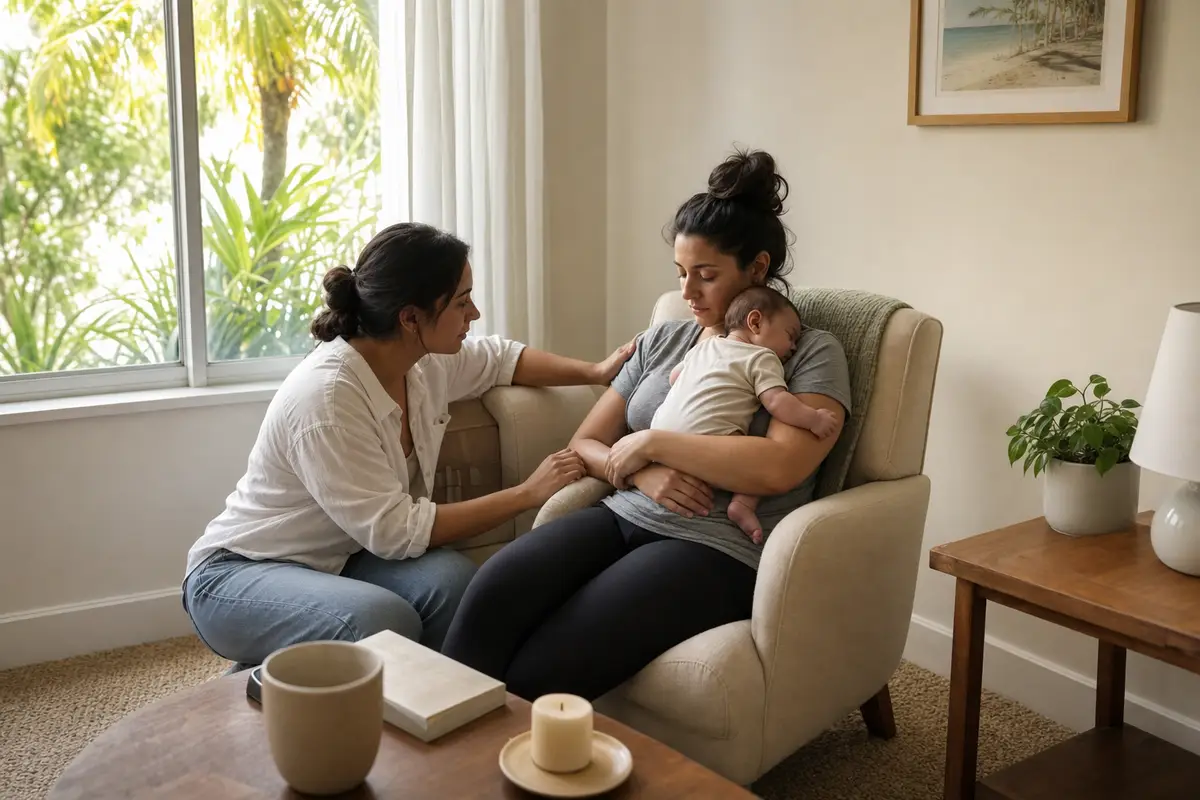
For a closer look at daily strategies between sessions, see how to deal with postpartum anxiety in practical terms and concrete ways a partner or support person supports recovery.
Many mothers want a timeline. Untreated, postpartum anxiety often persists for months or longer; with structured treatment, most women see meaningful relief within weeks. For more on what to expect, read about how long postpartum anxiety typically lasts and when postpartum anxiety typically eases.
Common questions about postpartum anxiety
What does postpartum anxiety feel like compared to panic attacks?
Postpartum anxiety sometimes involves panic attacks, but it’s often a lower, more constant hum rather than discrete episodes. A panic attack is a sharp spike of fear with physical symptoms like chest pain or a racing heart that peaks and passes within minutes. Postpartum anxiety is frequently a background state of dread that persists for hours or days, occasionally spiking into a panic attack but not requiring one to be present.
Can postpartum anxiety happen without any history of anxiety before pregnancy?
Yes. A mother with no prior anxiety history can experience postpartum anxiety for the first time after birth. Hormonal shifts, sleep deprivation, and the sheer weight of new responsibility for another person’s survival are enough to trigger it on their own, regardless of psychiatric history.
Is it normal to have scary thoughts about the baby getting hurt?
Unwanted, intrusive thoughts about harm coming to the baby are a documented symptom of postpartum anxiety and are distinct from a desire or intention to cause harm. These thoughts are distressing to the mother precisely because they conflict with her values. A licensed clinician distinguishes ordinary intrusive thoughts from a more serious concern and guides next steps.
Does postpartum anxiety go away on its own?
For some mothers, mild symptoms ease as sleep and hormones stabilize. For many others, symptoms persist or worsen without treatment, particularly if the underlying worry patterns go unaddressed. Structured therapy shortens the timeline for most women rather than waiting for symptoms to resolve unassisted.
When should I talk to someone about it?
If worry is interfering with sleep, eating, work, or your ability to be present with your baby, or if it has lasted more than two weeks without letting up, it’s time to talk to a professional. You do not need to wait until symptoms feel unbearable to seek an evaluation.
Understanding what postpartum anxiety feels like is the first step. The next is getting support that’s built specifically for this period of life, not generic stress management. Better You Therapy is a Florida-licensed mental health practice providing teletherapy statewide and on-site clinical services in Southeast Florida senior-living communities, with clinicians who work specifically with new mothers navigating postpartum anxiety. Reach out to begin therapy when you’re ready to talk to someone who understands exactly what you’re describing.