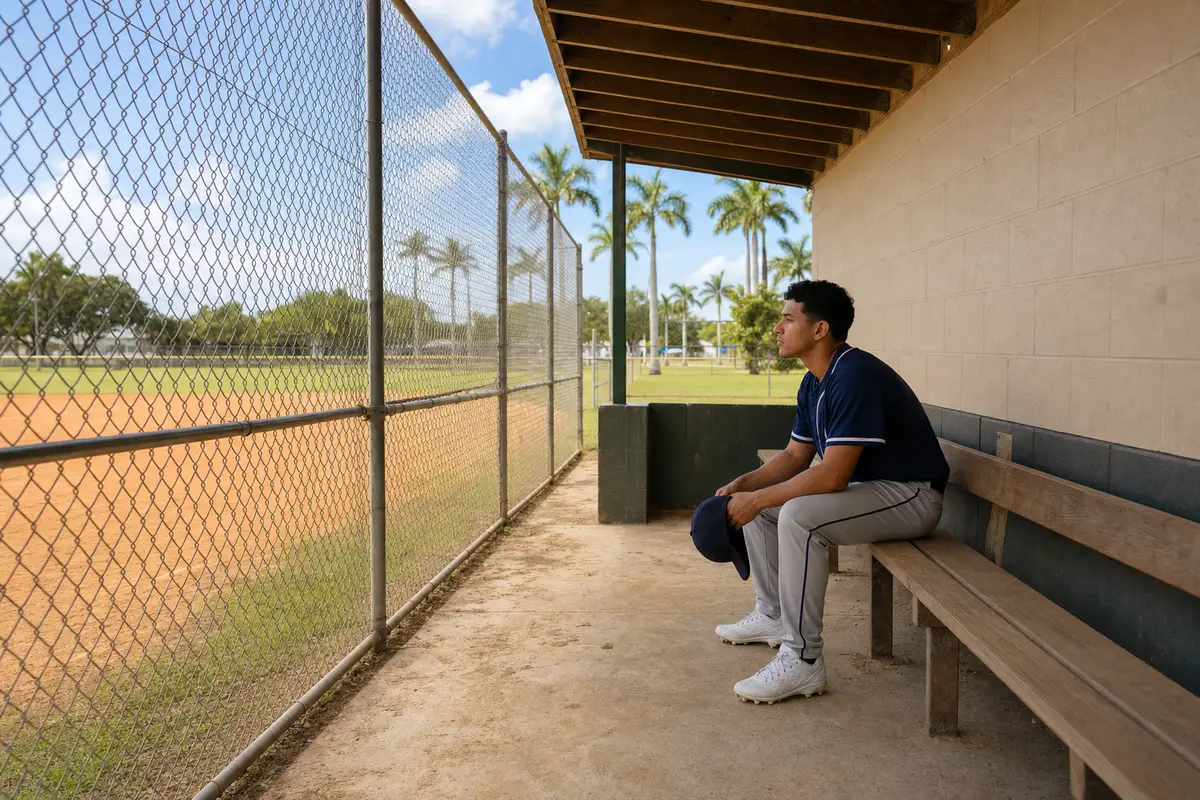

Key Takeaways
- Mental training for athletes uses structured techniques such as visualization, breathing control, and self-talk to manage pressure during competition.
- The goal is consistent execution under stress, not the elimination of nerves.
- These are trainable skills, built through repetition the same way a jump shot or a serve is built.
- A sports psychologist can design a personalized mental training plan when self-directed practice isn’t enough.
- Persistent performance anxiety, burnout, or loss of enjoyment in a sport are signs it’s worth talking to a professional.
When a free throw drops every time in an empty gym but disappears in the final seconds of a real game, the problem is rarely mechanical. Something shifts under pressure, and that shift is exactly what mental training for athletes is built to address. This kind of training is not vague ‘mental toughness’ talk. It is a set of learnable skills, practiced the same way a jump shot or a swing is practiced, with drills, repetition, and feedback built into the process.
Athletes at every level hit the same wall, from a high school runner chasing a personal record to a weekend tennis player who tightens up at match point. A gymnast who nails a routine in practice a dozen times can freeze on the same skill in front of judges. A golfer who putts smoothly on the practice green can watch the same stroke fall apart on the eighteenth hole with a title on the line. The body knows what to do. The mind gets in the way. That gap between practice performance and competition performance is where mental skills training does its work, and understanding what that work looks like is the first step toward closing the gap.
What mental training for athletes actually means
Mental training for athletes is the deliberate practice of psychological skills, focus, emotional regulation, confidence, and recovery from mistakes, that support performance under pressure. It uses techniques such as visualization, breathing exercises, self-talk, and pre-performance routines. Coaches and sports psychologists teach these skills with the same structure used for physical training: assessment, practice, repetition, and feedback.
The skills are specific, not abstract. An athlete learns to notice rising tension in their shoulders before a serve and has a breathing cue ready to reset it. Another learns to replace ‘don’t miss this’ with a short, neutral phrase that keeps attention on the target instead of the outcome. A third athlete works on a consistent pre-shot routine, the same sequence of movements and glances repeated before every free throw or serve, so the body has a familiar pattern to fall into when nerves spike.
This distinguishes mental training from generic encouragement. Telling an athlete to ‘just relax’ or ‘believe in yourself’ gives no concrete action to take in the moment. A trained breathing cue, a specific self-talk phrase, or a rehearsed routine gives the nervous system something to do instead of just reacting. That difference, a concrete action versus a vague instruction, is what makes these skills trainable rather than just motivational.
How mental training works in practice
Mental training programs typically combine a handful of core techniques, layered based on the sport and the individual athlete. A sprinter’s plan looks different from a golfer’s, but the underlying skills are largely the same.
Visualization and mental rehearsal
Visualization is the practice of mentally walking through a performance before it happens, in detail, using multiple senses rather than a vague daydream. A golfer might rehearse the exact feel of a swing on the eighteenth hole, including the sound of contact and the weight shift through the follow-through. Consider a diver preparing for a competition who runs through the full sequence, entry to exit, dozens of times in her mind before ever stepping onto the platform. She notices the water temperature, the position of her arms, the moment of release, and the sound of entry, building a mental copy of the dive so detailed that the physical version feels like a repeat rather than a first attempt. This kind of rehearsal builds familiarity, so the actual moment feels practiced rather than new.
Breathing and arousal control
Nervous system arousal, the body’s stress response, rises before competition whether an athlete wants it to or not. Slow, controlled breathing, extending the exhale longer than the inhale, is a direct way to bring that arousal back into a workable range. A common pattern is inhaling for four counts and exhaling for six, repeated for a minute before stepping onto the field or court. Athletes practice this outside of competition first, during regular training sessions, so the technique is automatic rather than one more thing to remember under pressure. Over time the breathing pattern itself becomes a cue, signaling to the body that it’s time to settle into a familiar working state.
Self-talk and focus cues
Self-talk is the internal narration every athlete already runs, whether they’ve noticed it or not. Mental training makes that narration deliberate: short, specific cues, ‘soft hands,’ ‘next play,’ replace vague or critical internal commentary. The goal is not blind positivity. It’s attention control, directing focus to what the athlete can act on right now. A basketball player who misses two free throws in a row might otherwise spiral into replaying the misses; a trained cue like ‘same routine, next shot’ redirects attention to the next controllable action instead.
Goal-setting and process focus
Outcome goals (‘win the match’) are largely outside an athlete’s direct control once competition starts. Process goals (‘hit my spots on serve,’ ‘keep my follow-through high’) are not. Mental training shifts an athlete’s attention toward the second kind of goal, because it’s the one the mind can actually act on in the moment, and it reduces the mental noise that outcome-focused thinking creates. A tennis player focused on winning the match has no clear action to take between points; a tennis player focused on footwork and follow-through has something specific to execute on the very next point.
What this means for your performance
None of this eliminates nerves, and it shouldn’t try to. Elite competitors still feel their heart rate climb before a big moment; a rising pulse is not a problem to fix, it is a normal signal that the body is preparing for effort. What mental training changes is what happens next: whether that arousal turns into a repeatable routine or into a spiral that pulls focus away from execution.
This is also where the line between self-directed practice and professional support gets clearer. A book or an app can teach the basics of visualization or breathing, and many athletes make real progress with that alone. A sports psychologist builds a plan around a specific athlete’s history, the demands of their particular sport, and the particular way pressure shows up for them, adjusting the plan as competition and season demands change. Understanding what a sports psychologist actually is helps clarify how that role differs from a general therapist’s.
The day-to-day work also looks different than many people expect. Reading through what a sports psychologist does day-to-day shows it’s less one long conversation about feelings and more assessment, skill-building homework, and regular check-ins on specific performance goals, closer in structure to a coaching relationship than typical talk therapy. Sessions often include reviewing how a specific technique performed in a recent competition and adjusting it before the next one.
When to consider working with a sports psychologist
Most athletes can build basic mental skills on their own with consistent practice. A few signs suggest it’s worth bringing in a professional instead of continuing to self-manage, especially when the same problem keeps recurring despite genuine effort to fix it independently.
Persistent anxiety that shows up well before competition and doesn’t ease with warm-up routines is one sign. So is a marked drop in enjoyment of a sport an athlete once loved, or a pattern of physical symptoms, nausea, tension headaches, sleep disruption, that clusters around competition. Burnout, distinct from normal fatigue, is another: a flattened motivation that rest alone doesn’t fix. An athlete experiencing burnout often describes going through the motions in practice, present physically but disengaged mentally, even in a sport that used to feel exciting.
A specific injury recovery timeline is another common trigger. An athlete returning from a torn ligament or a concussion sometimes finds that the physical clearance to play comes well before the mental readiness does, and that gap between the two can be hard to close alone. Browsing the sports psychology hub page helps clarify whether what you're dealing with fits before reaching out to a specific clinician.
Common questions about mental training for athletes
Do professional athletes actually use mental training?
Yes. Mental skills coaching is a standard part of preparation at the collegiate and professional level in most major sports, often built directly into team support staff alongside strength and conditioning coaches. Many professional teams now employ a sports psychologist on staff or on retainer, treating mental preparation as routine as physical conditioning rather than as an intervention reserved for athletes already in crisis.
How long does mental training take to show results?
Most athletes notice a difference in composure within a few weeks of consistent practice, similar to any new physical skill. Deeper changes, like shifting a long-standing pattern of pre-competition anxiety, typically take longer and benefit from professional guidance. As with strength training, the first noticeable gains often come quickly, while the deeper, more durable changes build over a full season or longer.
Is mental training only for elite or professional athletes?
No. The same techniques used by professional competitors apply to a teenager nervous before tryouts or an adult recreational athlete who freezes up in a local league final. The skills scale to whatever level of competition matters to the athlete, whether that’s an Olympic final or a Tuesday night rec league game that still matters enormously to the person playing in it.
Can mental training help with a specific fear, like fear of re-injury?
Yes. Fear of re-injury after a significant injury is one of the more common reasons athletes seek out a sports psychologist, since it often persists after a doctor has cleared the athlete to return to full activity. Visualization, graded exposure to the feared movement, and confidence-building routines are frequently part of that specific work.
Working with a licensed clinician on mental performance
Better You Therapy is a Florida-licensed mental health practice providing teletherapy statewide and on-site clinical services in assisted living, skilled nursing, and CCRC communities across Southeast Florida. For athletes working through performance anxiety, focus problems, or burnout, teletherapy sessions connect you with a licensed clinician by video, without a referral or a waitlist standing in the way of the first appointment.
Sessions are scheduled around training and competition demands rather than the other way around, and billing is handled directly with Medicare and private insurance so the administrative side of getting started doesn’t become its own source of stress. An athlete dealing with a specific block, whether that’s a fear of re-injury, a pattern of pre-competition anxiety, or burnout that rest hasn’t resolved, can bring that exact concern to the first session. The structure of these sessions tends to mirror what’s described above: specific goals, concrete techniques, and a clear way to measure whether the approach is working.
For related reading, see our guide on Why Is Sports Psychology Important.
For related reading, see our guide on Performance Anxiety Athletes Face: Why It Happens, What Helps.